Tuesday, June 05, 2007

Google Earth phylogenies

Now, for something completely different. I've been playing with Google Earth as a phylogeny viewer, inspired by Bill Piel's efforts, the cool avian flu visualisation Janies et al. published in Systematic Biology (doi:10.1080/10635150701266848), and David Kidd's work.


As an example, I've taken a phylogeny for Banza katydids from Shapiro et al. (doi:10.1016/j.ympev.2006.04.006), and created a KML file. Unlike Bill's trees, I've drawn the tree as a phylogram, because I think biogeography becomes much easier to interpret when we have a time scale (or at least a proxy, such as sequence divergence).


I've converted COI branch lengths to altitude, and elevated the tree off the ground to accomodate the fact that the tips don't all line up (this isn't an ultrametric tree). I then use the extrude style of icon so we can see where exactly the sequence was obtained from.


Wouldn't it be fun to have a collection of molecular trees for Hawaiian taxa for the same gene, plotted on the same Google Earth map? One could imagine all sorts of cool questions one could ask about the kinds of biogeographic patterns displayed (note that Banza doesn't show a simple west-east progression), and the ages of the patterns.

Generating the KML file is fairly straightforward, and if I get time I may add it to my long neglected TreeView X.

Wednesday, May 30, 2007

AMNH, DSpace, and OpenURL

Hate my tribe. Hate them for even asking why nobody uses library standards in the larger world, when “brain-dead inflexibility in practice” is one obvious and compelling reason, and “incomprehensibility” is another.

... $DEITY have mercy, OpenURL is a stupid spec. Great idea, and useful in spite of itself. But astoundingly stupid. Ranganathan preserve us from librarians writing specs! - Caveat Lector


OK, we're on a roll. After adding Journal of Arachnology and Pysche to my OpenURL resolver, I've no added the American Museum of Natural History's Bulletins and Novitates.

In an act of great generosity, the AMNH has placed its publications on a freely accessible DSpace server. This is a wonderful resource provided by one of the world's premier natural history museums (and one others should follow), and is especially valuable given that volumes of the Bulletins and Novitates post 1999 are also hosted by BioOne (and hence have DOIs), but these versions of the publications are not free.

As blogged earlier on SemAnt, getting metadata from DSpace in a actually usable form is a real pain. I ended up writing a script to pull everything off via the OAI interface, extract metadata from the resulting XML, do a DOI look-up for post 1999 material, then dump this into the MySQL server so my OpenURL service can find it.


Apart from the tedium of having to find the OAI interface (why oh why do people make this harder than it needs to be?), the metadata served up by the AMNH is, um, a little ropey. They use Dublin Core, which is great, but the AMNH makes a hash of using it. Dublin Core provides quite a rich set of terms for describing a reference, and guidelines on how to use it. The AMNH uses the same tag for different things. Take date, for example:

<dc:date>2005-10-05T22:02:08Z</dc:date>
<dc:date>1946</dc:date>

Now, one of these dates is the date of publication, the others are dates the metadata was uploaded (or so I suspect). So, why not use the appropriate terms? Like, for instance, <dcterms:created>. Why do I have to parse three fields, and intuit that the third one is the date of publication. Likewise, why have up to three <dc:title> fields, and why include an abbreviated citation in the title? And why for the love of God, format that citation differently for different articles!? Why have multiple <dc:description> fields, one of which is the abstract (and for which <dcterms:abstract> is available?). It's just a mess, and it's very annoying (as you can probably tell). I can see some hate library standards.

Anyway, after much use of Perl regular expressions, and some last minute finessing with Excel, I think we now have the AMNH journals available through OpenURL.

For a demo, go to David Shorthouse's list of references for spiders, say the letter P and click on the bioGUID symbol by a paper by Norm Platnick in the American Museum novitates.

Monday, May 28, 2007

OpenURL and spiders

I'm not sure who said it first, but there's a librarianly spin on the old Perl paradigm I think I heard at code4libcon or Access in the past year: instead of "making simple things simple, and complex things possible," we librarians and those of us librarians who write standards tend, in writing our standards, to "make complex things possible, and make simple things complex."
That approach just won't cut it anymore.
-Dan Chudnov, Rethinking OpenURL


Time to bring some threads together. I've been working on a tool to parse references and find existing identifiers. The tool is at http://bioguid.info/references (for more on my bioGUID project see the blog). Basically, you paste in one or more references, and it tries to figure out what they are, using ParaTools and CrossRef's OpenURL resolver. For example, if you paste in this reference:
Vogel, B. R. 2004. A review of the spider genera Pardosa and Acantholycosa (Araneae, Lycosidae) of the 48 contiguous United States. J. Arachnol. 32: 55-108.

the service tells you that there is a DOI (doi:10.1636/H03-8).


OK, but what if there is no DOI? Every issue of the Journal of Arachnology is online, but only issues from 2000 onwards have DOIs (hosted by my favourite DOI breaker, BioOne). How do I link to the other articles?

One way is using OpenURL. What I've done is add an OpenURL service to bioGUID. If you send it a DOI, it simply redirects you to dx.doi.org to reoslve it. But I've started to expand it to handle papers that I know have no DOI. First up is the Journal of Arachnology. I used SiteSucker to pull all the HTML files listing the PDFs from the journal's web site. Then I ran a Perl script that read each HTML file and pulled out the links. There weren't terribly consistent, there are at least five or six different ways the links are written, but they are consistent enough to parse. What is especially nice is that the URLs include information on volume and starting page number, which greatly simplifies my task. So, this gives me list of over 1000 papers, each with a URL, and for each paper I have the journal, year, volume, and starting page. These four things are enough for me to uniquely identify the article. I then store all this information in a MySQL database, and when a user clicks on the OpenURL link in the list of results from the reference parser, if the journal is the Journal of Arachnology, you go straight to the PDF. Here's one to try.


Yeah, but what else can we do with this? Well, for one thing, you can use the bioGUID OpenURL service in Connotea. On the Advanced settings page you can set an OpenURL resolver. BY default I use CrossRef, but if you put "http://bioguid.info/openurl.php" as the Resolver URL, you will be able get full text for the Journal of Arachnology (providing that you've entered sufficient bibliographic details when saving the reference).

But I think the next step is to have a GUID for each paper, and in the absence of a DOI I'm a favour of SICI's (see my del.icio.us bookmarks for some background). For example, the paper above has the SICI 0161-8202(1988)16<47>2.0.CO;2-0. If this was a resolvable identifier, then we would have unique, stable identifiers for Journal of Arachnology papers that resolve to PDFs. Anybody making links between, say a scientific name and when it was published (e.g., catalogue of Life) could use the SICI as the GUID for the publication.

I need to play more with SICIs (and when I get the chance I'll write a post about that the different bits of a SICI mean), but for now before I forget I'll note that while writing code to generate SICIs for Journal of Arachnology I found a bug in the Perl module Algorithm-CheckDigits-0.44 that I use to compute the checksum for a SICI (the final character in the SICI). The checksum is based on a sum of the characters in the SICI modulo 37, but the code barfs if the sum is exactly divisible by 37 (i.e., the remainder is zero).

Biodiversity Heritage Library blog - look but don't touch

Added the Biodiversity Heritage Library blog to my links on my blog, then noticed that BHL have disabled comments. So, we can view their progress, but can't leave comments. Sigh, I wonder whether BHL has quite grasped that one of the best uses of a blog is to interact with the people who leave comments, in other words, have a conversation. If nothing else, at least it gives you some idea of whether people are actually reading it.
That said, the stuff BHL are putting up on the Internet Archive looks cool. However, how do we find this stuff, and link to it (identifiers anyone?). Wouldn't the BHL blog be a great place to have this conversation...?

Wednesday, May 23, 2007

iTunes, embedded metadata, and DNA barcoding

Continuing on this theme of embedded metadata, this is one reason why DNA barcodingis so appealing. A DNA barcode is rather like embedded metadata -- once we extract it we can look up the sequence and determine the organism's identity (or, at least whether we've seen it before). It's very like identifying a CD based on a hash computed from the track lengths. Traditional identification is more complicated, involves more nebulous data (lets see, my frog has two bumps on the head, gee, are those things in that picture of a frog bumps?), much of which is not online.

Tuesday, May 22, 2007

XMP


Following on from the previous post, as Howison and Goodrum note, Adobe provides XMP as a way to store metadata in files, such as PDFs. XMP supports RDF and namespaces, which means widely used bibliographic standards such as Dublin Core and PRISM can be embedded in a PDF, so the article doesn't become separated from its metadata. Adobe provides a developers kit under a BSD license.

The vision of managing digital papers being as easy as managing digital music is really compelling. Imagine auto populating bibliographic management software simply by adding the PDF! Note also that the Creative Commons supports XMP.

Monday, May 21, 2007

iTunes and citation metadata.

Stumbled across a really nice paper (Why can't I manage academic papers like MP3s?) while reading commentary on Tim O'Reilley's post about FreeBase.


In response to Danny Ayer's post, Tim O'Reilly wrote
I think you miss my point. I wasn't using centralized vs. decentralized as the point of contrast. I was using pre-specified vs. post-specified.

Now, I know you are much closer to all the sem web discussions than I am, and I probably have mischaracterized them somewhat. But you have to ask why are they so widely mischaracterized? There's some fire to go with that smoke.

In a very different context, on a mailing list, Bill Janssen wrote something very apposite:

"Let me recommend the paper "Why can't I manage academic papers like MP3s?", (yes, I realize accepted standards say I should put that comma inside the quotation marks) by James Howison and Abby Goodrum, at http://www.freelancepropaganda.com/archives/MP3vPDF.pdf. The basic thesis is that our common document formats weren't designed for use with digital repositories, and that metadata standards are often designed for the use of librarians and publishers, who have different metadata concerns than end-users have."

That's the distinction between the Semantic Web and Web 2.0 that I was trying to get at.


Howison and Goodrum make some interesting points, especially about how easy it is to get (or create) metadata for a CD, especially when compared to handling academic literature. Charlie Rapple on All My Ey suggests that
While the authors' [Howison and Goodrum] pains have to an extent been resolved since, by online reference management/bookmarking tools such as Connotea or CiteULike (which both launched later that year), and by the increase in XML as a format for online articles (which unites the full text and metadata in one file), their issues with full text availability remain.

I think the pain is still there, especially as Connotea relies on articles having a DOI (or some other URI or identifier). Many articles don't have DOIs. Furthermore, often a paper will have a DOI but that DOI is not printed on the article (either the hard copy of the PDF). This is obviously true for articles that were published before DOIs came in to existence, but which now have DOIs, however it is also the case for some recent articles as well. This means we need to use metadata about the article to try and find a DOI. In contrast, programs like iTunes use databases such as Gracenote CDDB to retrieve metadata for a CD, where the CD's identity is computed based on information on the CD itself (i.e., the track length). The identifier is computed from the object at had.
This one reason why I like SICIs (Serial Item and Contribution Identifier, see my del.icio.us bookmarks for sici for some background). These can be computed from metadata about an individual article, often using just information printed with the article (although the ISSN number might not be). This, coupled with the collaborative nature of CD databases such as CDDB and freedb (users supply missing metadata) makes them a useful illustration for how we might construct a database of taxonomic literature. Users could contribute metadata about papers, with identifiers computed from the papers themselves.

Saturday, May 19, 2007

EoL in the blogsphere


postgenomic is a great way to keep up with science blogs. For example, searching for encyclopedia of life pulls up all sorts of interesting posts. A sampling:

Island of doubt
There is simply no way around this taxonomic deficit. While the EOL won't by itself answer too many questions, by drawing attention to how much work remains before we begin to get a grip on the ecosystems we are already manipulating beyond recognition, maybe, just maybe, we can re-distribute some of our research resources to that less glamorous pursuit known an inventory control.


SciGuy
PRO: Jonathan Fanton, president of the MacArthur Foundation. This is certainly going to advance the science of identification, and the science behind biodiversity.
CON: Dan Graur, a University of Houston professor of biology. I'm skeptical. Some of this knowledge goes back to the 18th century. It's all very nice, but this is not a scientific endeavor, it's an editorial effort. I'm a scientist, I like new knowledge.


My Biotech Life
That flash phylogenetic tree just blew my mind. And the level bar that hides/shows information depending your knowledge level, also cool!


Pharnagula
I don't mean to sound so negative, since I think it's an eminently laudable goal, but I get very, very suspicious when I see all the initial efforts loaded towards building a pretty front end while the complicated core of the project is kept out of focus. I'd be more impressed with something like NCBI Entrez, which, while not as attractive as the EOL mockups, at least starts with the complicated business of integrating multiple databases. I want to see unlovely functionality first, before they try to entice me with a pretty face.


These are not the only blogs, and as always the comments left by others on these blogs is also fascinating. My sense is there is a "wow" factor based on the the publicity, coupled with not inconsiderable skepticism about content.

Friday, May 18, 2007

TBMap paper out

My paper on mapping TreeBASE names to other databases is out as provisional PDF on the BMC Bioinformatics web site (doi:10.1186/1471-2105-8-158 -- not working yet).

The abstract:
TreeBASE is currently the only available large-scale database of published organismal phylogenies. Its utility is hampered by a lack of taxonomic consistency, both within the database, and with names of organisms in external genomic, specimen, and taxonomic databases. The extent to which the phylogenetic knowledge in TreeBASE becomes integrated with these other sources is limited by this lack of consistency.
Taxonomic names in TreeBASE were mapped onto names in the external taxonomic databases IPNI, ITIS, NCBI, and uBio, and graph G of these mappings was constructed. Additional edges representing taxonomic synonymies were added to G, then all components of G were extracted. These components correspond to "name clusters", and group together names in TreeBASE that are inferred to refer to the same taxon. The mapping to NCBI enables hierarchical queries to be performed, which can improve TreeBASE information retrieval by an order of magnitude.
TBMap database provides a mapping of the bulk of the names in TreeBASE to names in external taxonomic databases, and a clustering of those mappings into sets of names that can be regarded as equivalent. This mapping enables queries and visualisations that cannot otherwise be constructed. A simple query interface to the mapping and names clusters is available at: http://linnaeus.zoology.gla.ac.uk/~rpage/tbmap

The TBMap web site needs some work, it's really only intended to document the mapping. Once I've tweaked and updated the mapping, I hope to use it in my forthcoming all-sining, all-dancing, phylogeny database...

Monday, May 14, 2007

More EoL commentary

Lucy Odling-Smee has a short piece on EoL in Nature (doi:10.1038/news070508-7), quoting a certain Page chap as saying
"If it's done well it could be fabulous"

Not the most insightful thing I've ever said. One of the issues Lucy's piece highlights is the long term sustainability of electronic resources like EoL. The whole issue of digital curation is worrying, given the transient nature of many electronic resources.

Friday, May 11, 2007

EoL commentary in Science

Mitch Leslie has written an article on EoL (doi:10.1126/science.316.5826.818). It starts:
Hands up if you've heard this before: An ambitious new project promises to create an online compendium of all 1.8 million or so described species. It can already claim participation by premier institutions, a wad of start-up cash, and huzzahs from biodiversity guru Edward O. Wilson. Although some confess to a wary sense of déjà vu, taxonomists hope that the Encyclopedia of Life (EOL) can provide the long-awaited comprehensive species catalog. Even enthusiasts agree that it faces some tall hurdles, however, such as signing up curators and getting permission to use copyrighted material.

Déjà vu because the defunct All-Species Foundation -- also covered in Science (doi:10.1126/science.294.5543.769) -- had much the same ambitions six years ago. It is easy to be sceptical, but I think it was Rudi Giuliani who said "under promise, over deliver." Wise words.

Thursday, May 10, 2007

David Shorthouse enters the blogsphere


David Shorthouse has entered the blogsphere with his iSpiders blog. As David descrbes it:
This blog will include bits that have fallen off the wagon as it were while developing The Canadian Arachnologist, The Nearctic Spider Database, The Nearctic Arachnologists' Forum and Spider WebWatch. The latter is a citizen science initiative that accepts observation data on 9 ambassador species in North America. I have a strong interest in federating biological data so there will undoubtedly be posts about nomenclatural management, species concepts, data aggregation techniques and the like.

Already some interesting commentary on EoL

ITIS and DOIs


Following on from my earlier grumble about how the catalogue of Life handles literature, I've spent an afternoon mapping publications in the "itis".publications table in a copy of ITIS to external GUIDs, such as DOIs, Handles, and SICIs in JSTOR. The mapping is not complete by any means, but gives an idea of how many publications have GUIDs.You can view the mapping here. Many of the publications in ITIS are books, which don't have DOIs. A lot of the literature is also old (although this doesn't always mean it won't have a DOI).

Of 4296 records, 324 have DOIs (around 7.5%). Not a lot, but a still a reasonable chunk. At least 700 of the ITIS publications are books (based on having an ISBN), so the percentage is a little higher.

The point of this exercise (following on from my comments on the design flaw in the catalogue of life), is that I think taxonomic databases need to use GUIDs internally to maximise their stability and utility.

Indeed, this is another reason to be disappointed with ZooBank. In addition to a poor way to navigate trees (which prompted me to explore tools such PygmyBrowse), ZooBank does exactly what ITIS and the Catalogue of Life do when it comes to displaying literature -- it displays a text citation (albeit with an invitation to view that record in Zoological Record, a subscription-based service).

For example, the copepod Nitocrellopsis texana was described in ITIS publication 3072, which I've discovered has the the DOI doi:10.1023/A:1003892200897. Given a DOI we have a GUID for the publication, and a direct link to it. In contrast, ZooBank merely gives us:
Nitocrellopsis texana n. sp. from central TX (U.S.A.) and N. ahaggarensis n. sp. from the central Algerian Sahara (Copepoda, Harpacticoida). Hydrobiologia 418 (1-3) 15 January: 82

and a link to Zoological Record. Interesting, even with the resources of ISI behind it, the Zoological Record result doesn't have the DOI.

This for me is one reason ZooBank was so disappointing, it actually provided little of value.

What next? Well, with the 300 or so references mapped to DOIs, one could link those to the ITIS records for the corresponding taxonomic names, and serve these up through somehting like iSpecies, for example. These would be links to the literature, in many cases original descriptions, to supplement the other literature found by iSpecies.

Wednesday, May 09, 2007

Catalogue of Life design flaw


A bit more browsing of the Catalogue of Life annual checklist for 2007 reveals a rather annoying feature that, I think, cripples the Catalogue's utility. With each release the checklist grows in size. From their web site:
The Species 2000 & ITIS Catalogue of Life is planned to become a comprehensive catalogue of all known species of organisms on Earth by the year 2011. Rapid progress has been made recently and this, the seventh edition of the Annual Checklist, contains 1,008,965 species.

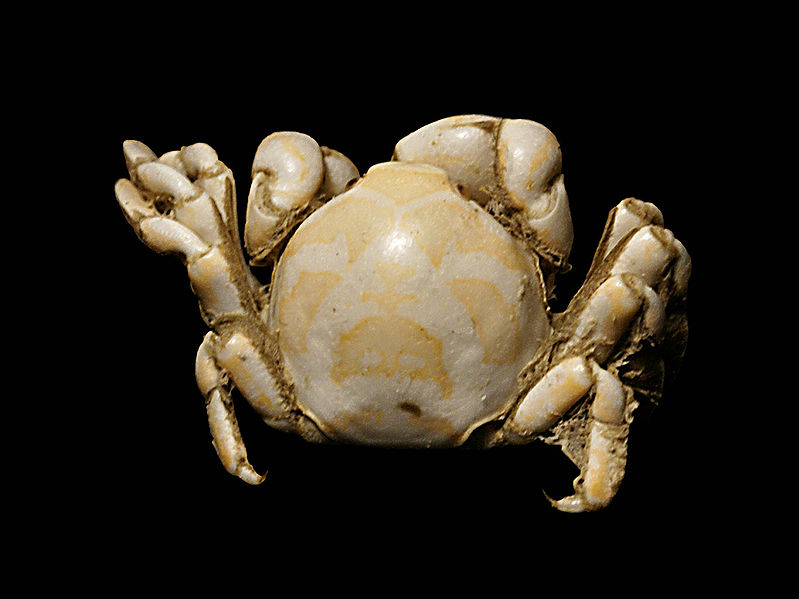
However, with each release the identifiers for each taxon change. For example, if I were to link to the record for the peacrab Pinnotheres pisum this year (2007), I would link to record 3803555, but last year I would have linked to 872170. Record 872170 no longer exists in the 2007 edition.

So, what would a user who based their taxonomic database on the Catalogue of Life do? All their links would break (not just because the URL interface has changed, but the underlying identifiers have changed as well). It's as if the authors of the catalogue have been oblivious to the discussion on globally unique identifiers (GUIDs) and the need for stable, persistent identifiers.

Anybody building a database that gets updated, and possible rebuilt needs to thik about how their identifiers will change. If identifiers are simply the primary keys in a table, then they will likely be unstable, unless great care is taken. Althernatively, databases that are essentially aggregations of data available elsewhere could use GUIDs as the primary keys. This means that even if the database is restructured, the keys (and hence the identifiers) don't change. For the user, everything still works.

Despite the favourable press about its progress (e.g., doi:10.1038/news050314-6, Environmental Research Web, and CNN), I think the catalogue needs some serious rethinking if it is to be genuinely useful. For more on this, see my earlier posting on how the catalogue handles literature.

Image of Pinnotheres pisum by Hans Hillewaert obtained from Wikimedia Commons.

Encyclopedia of Life Launch


The Encyclopedia of Life web site is up, together with some rather breathless publicity and this cool movie. Of course, it's all vapourware just now. I'm involved in some of the informatics in an advisory role. It will be interesting to see what happens. Let's hope that the fate of EoL will be different to that of the similarly ambitious All Species. Oh, and then there's SpeciesBase...

For some reaction see Slashdot.

Tuesday, May 08, 2007

Duplicate DOIs

I think this isn't supposed to happen, but here's a paper with two DOIs.

The first DOI is doi:10.1651/0278-0372(1997)17[253:MPAOTC]2.0.CO;2, which links to a record served by BIOONE. The second is doi:10.2307/1549275, which links to a JSTOR record (sici:0278-0372(199705)17:2<253:MPAOTC>2.0.CO;2-O).

The paper is:
Morphology-Based Phylogenetic Analysis of the Clawed Lobsters (Family Nephropidae and the New Family Chilenophoberidae)
Dale Tshudy, Loren E. Babcock
Journal of Crustacean Biology, Vol. 17, No. 2 (May, 1997), pp. 253-263


Now, the digital versions served by BIOONE and JSTOR is different, in that BIOONE serves full text HTML and a PDF, whereas JSTOR serves scanned images, but this is the same article.

As an added "feature", the BIOONE DOI doesn't work, which in my experience is often the case with BIOONE DOIs.

Monday, May 07, 2007

Catalogue of Life, OpenURL, and taxonomic literature


Playing with the recently released "Catalogue of Life" CD, and pondering Charles Hussey's recent post to TAXACOM about the "European Virtual Library of Taxonomic Literature (E-ViTL)" (part of EDIT) has got me thinking more and more about how primitive our handling of taxonomic literature is, and how it cripples the utility of taxonomic databases such as the Catalogue of Life. For example, none of the literature listed in the Catalogue of Life is associated with any digital identifier (such as a DOI, Handle, SICI, or even a URL). In the digital age, this renders the literature section nearly useless -- a user has to search for the reference in Google. Surely we want identifiers, not (often poorly formed) bibliographic citations? For example, I think hdl:2246/4613 is more useful than
Schmidt, K. P. 1921. New species of North American lizards of the genera Holbrookia and Uta. American Museum Novitates (22)

Given the Handle hdl:2246/4613, we get straight to the bibliographic resource, and in this case, a PDF of the paper. In the digital age this is what we need.

So, how to get there? Well, I think we need to focus on developing services to associate references with identifiers. Imagine a service that takes a bibliographic record and returns a globally unique identifier for that reference. This, of course, is part of what CrossRef provides through its OpenURL resolver.

OpenURL has been around a while, and despite the fact that it is probably over complicated (see I hate library standards for more on the seeming desire of librarians to make things harder than they need to be), I think it is a useful way to think about the task of linking taxonomic names to literature, especially if we keep things simple (see Rethinking OpenURL). In particular, drop the obsession with local context -- I don't care what my local library has, my library is the cloud.

So, what if we had an OpenURL service that took a bibliographic citation and queried local and remote sources for a digital identifier, such as a DOI or a Handle, for that citation? If there is no such identifier, then the next step is to create one. For example, the service could create a SICI (see my del.icio.us bookmarks for sici) for that item. Ideally, for those items that were digitised, we could have a database that associated SICIs with the resource location. For example, most of the journal Psyche is available free online as PDFs, and has XML files for each volume providing full bibliographic details (including URLs). It would be trivial to harvest these and add this information to an OpenURL service.

These ideas need a little more fleshing out, but I think it's time the taxonomic community started thinking seriously about digital identifiers for literature, and how they would be used. CrossRef is a great example of what can be done with some simple services (Handles + OpenURL), and it's a tragedy that every time DOIs come up people get blinded by cost, and don't spend time trying to understand how CrossRef works. If nyou want a good demonstration of what can be done with CrossRef, just look at Connotea, which builds much of its functionality on top of CrossRef web services.

It is also interesting that CrossRef is much simpler to use than repositories such as DSpace (used by the AMNH's digital library) -- each DSpace installation has it's own hooks to retrieve metadata (in some cases, such as the AMNH, appallingly badly formed), and as a result there is no easy way to discover what metadata is associated with a given handle, nor given a citation whether a handle exists for that citation.

So, when projects such as EDIT start talking about taxonomic libraries, I think they need to think in terms of simple web services that will serve as the building blocks for other tools. An OpenURL service would be a major boon, and would speed us towards the day when databases such as the Catalogue of Life would not contain (often inconsistently formed) text records of bibliographic works, but actionable identifiers. Any thing less and we remain in the dark ages.

Wednesday, May 02, 2007

Google, the Ken Burns Effect, and Fractal Cognitive Engagement


From One Big Library, a nice screencast of why Google's interface works, in contrast to the clunky interfaces favoured by libraries (and databases such as TreeBASE). (If you don't see the video here, visit http://www.youtube.com/watch?v=ijLDxgALc2c.)

Sunday, April 22, 2007

EvoViz


David Kidd has put together evoviz.org. To quote from the wiki:
EvoViz is a collaborative Wiki space within which scientists, educators and artists can present and discuss the visualization of evolutionary concepts, processes and data.

There is movie demo online at GUBA.

Monday, March 12, 2007

Generating alternative citation metrics for the scientific literature


In his post Matthew Cockerill lists three "practical things that Google could do to improve the communication of scientific research", one of which I'd like to highlight:
Generate alternative citation metrics for the scientific literature
Journal citation metrics from a single company currently dominate the research evaluation process. This is unhealthy in all sorts of ways. When (and whether) a journal gets tracked by Thomson Scientific is something of a lottery, and even once a journal is tracked, it typically takes 3 more years before an official impact factor is made available. Google Scholar could generate citation metrics more rapidly and more comprehensively than this, and in doing so would help level the playing field between established journals and innovative new journals which, while highly cited, do not yet have impact factors..

I think this is timely because I've been thinking about citation in the broader sense (e.g., citation networks for GenBank sequences, museum specimens, and taxonomic names). Part of this has come out of thinking about using citation networks to find good phylogenies, but also the concern raised by some taxonomists that their work is under cited (see Taxonomic inflation: two additional causes). The solution often suggested is to cite the publication of original scientific descriptions more often in the literature, but this seems to me to be a poor solution. It needlessly inflates the list of references cited (biologists are already pretty bad at this), and I think it tries to play a game that taxonomy will fail to win. Simply trying to increase the number of times taxonomic work is cited will do little in then long term unless that work is accessible, i.e., available online, with unique identifiers (such as DOIs).
Furthremore, I think we should extend this notion of "citation" to include GenBank records, specimens, etc. In this way we could compute the "impact factor" of, say, a museum specimen, and develop metrics of its true value. See also the commentary "Publishing perishing? Towards tomorrow's information architecture" (doi:10.1186/1471-2105-8-17).

Friday, March 09, 2007

More on TED Prize

E. O. Wilson's wish list has been posted on the TED site, and Donat Agosti has some commentary on biodivcontext. Apparently, even Bill Clinton was outshone.

Thursday, February 22, 2007

EO Wilson recipient of the TED award 2007


Donat Agosti has interesting commentary on E. O. Wilson's forthcoming receipt of a TED 2007 prize. In typically forthright fashion, Donat asks:
Let’s speculate that Ed Wilson is going to fulfill his boyhood dream of an encyclopedia of life for ants. So, what would be needed to make this dream reality?

Read his post for Donat's own wish list.

Monday, February 12, 2007

Word for the day - "clusterfuck"


Wired's article How Yahoo Blew It contains this wonderful extract:
Decisions big and small, from trying out new features to agreeing on budgets, had to be cleared by committee after committee in Sunnyvale. "It was a clusterfuck," one of the participants says.

For some reason, the word really appeals. Not that I've got anything against Yahoo -- far from it. The provide some very cool tools, such as Pipes, which is an interactive feed aggregator and manipulator. David Shorthouse brought this to my attention. As he points out, its highly relevant to our conversation on iSpecies.

Saturday, February 10, 2007

Many Eyes


Spotted on information aesthetics, IBM's Many Eyes looks very cool. It's a way to share visualisations of data.

Friday, February 09, 2007

TreeBASE name mapping

In the spirit of "release early, release often", a preliminary version of the TreeBASE name mapping project is now online at TBMap. It's a bit crude, the graphs look awful because they're generated on the fly on a Linux box using GraphViz, but you'll get the idea. I'll try and tidy it up and add a few more visuals to it next week after the EOL Informatics meeting at Woods Hole. There are also some missing mappings to add to the database. I hope to finish a manuscript explaining the gory details in a week or so. This manuscript will also explain what one can do with these mappings (i.e., find all the studies for birds or other higher taxa in TreeBASE).

Wednesday, January 31, 2007

When phylogenetic names would be useful

To avoid being charged with being consistent (unlikely, I know), despite being underwhelmed by phylogenetic names in the context of TreeBASE (see conversation with David Marjanović in the previous post), I think they could be very useful in annotating phylogenetic trees. One of the things that impresses me most about Google Earth is the community that has developed around this tool (take a look at the latest issue of Sightseer). Lots of people are contributing content to Google Earth, and I think this is driven in part by the ease of creating the KML files that Google Earth uses, and the ease of referring to a geographic location (i.e., latitude and longitude).

Imagine having a similar tool for phylogenetics, where people could add annotations (such as "wings developed here", "oldest fossil found at this site", "pollination mode changed here", "change in base composition took place here", etc.). A bit like MacClade on steroids, or a community driven version of the TaxonTree tool developed by the University of Maryland's Human-Computer Interaction Lab (see their page on Biodiversity Informatics Visualization).

Leaving aside the issue of file format, we'd need a way of unambiguously locating a point on a tree. An obvious solution is to use least common ancestors (same concept as most recent common ancestors), as used in phylogenetic nomenclature (although not in apomorphy-based definitions, which strike me as a disaster waiting to happen).

It's in this sort of context that I think phylogenetic names show great promise. For some nice examples of using LCA's to identify nodes, take a look at the mor server (seemingly down at present, but described in a paper by David Hibbett and colleagues doi:10.1080/10635150590947104), and Michael Sanderson's program r8s. The mor package uses phylogenetic definitions of names to locate the corresponding groups in a large phylogenetic tree, and r8s has the MRCA command to attach age constraints to nodes in a tree.

Tuesday, January 30, 2007

Quixotic(?) tree of Life visualisation

The Ant Room has a nice post on Visualizing the tree of life, with some cool links. And just to balance that, Donat Agosti drew my attention to Ford Doolittle and Eric Bapteste's PNAS article "Pattern pluralism and the Tree of Life hypothesis" doi:10.1073/pnas.0610699104. The abstract:
Darwin claimed that a unique inclusively hierarchical pattern of relationships between all organisms based on their similarities and differences [the Tree of Life (TOL)] was a fact of nature, for which evolution, and in particular a branching process of descent with modification, was the explanation. However, there is no independent evidence that the natural order is an inclusive hierarchy, and incorporation of prokaryotes into the TOL is especially problematic. The only data sets from which we might construct a universal hierarchy including prokaryotes, the sequences of genes, often disagree and can seldom be proven to agree. Hierarchical structure can always be imposed on or extracted from such data sets by algorithms designed to do so, but at its base the universal TOL rests on an unproven assumption about pattern that, given what we know about process, is unlikely to be broadly true. This is not to say that similarities and differences between organisms are not to be accounted for by evolutionary mechanisms, but descent with modification is only one of these mechanisms, and a single tree-like pattern is not the necessary (or expected) result of their collective operation. Pattern pluralism (the recognition that different evolutionary models and representations of relationships will be appropriate, and true, for different taxa or at different scales or for different purposes) is an attractive alternative to the quixotic pursuit of a single true TOL.

Encyclopedia of Life


Imagine an electronic page for each species of organism on Earth, available everywhere by single access on command. The page contains the scientific name of the species, a pictorial or genomic presentation of the primary type specimen on which its name is based, and a summary of its diagnostic traits. The page opens out directly or by linkage with other databases such as ARKive, Ecoport, and GenBank. It comprises a summary of everything known about the species' genome, proteome, geographic distribution, phylogenetic position, habitat, ecological relationships, and, not least, its perceived practical importance for humanity. - E . O. Wilson, 2003

E. O. Wilson's much used quote features prominently on the EoL Informatics web site. This project involves the Smithsonian Institution, Field Museum, Harvard University, Biodiversity Heritage Library, and the MBL. I will be at the Informatics Workshop next month.

For my own toy efforts in this direction, see iSpecies.

Phylocode

Comments by David Marjanović elsewhere on this blog (here and here) about TreeBASE, classification and Phylocode have prompted me to write a little bit about why I'm underwhelmed by the Phylocode. Suppose I have the question:
"find me all studies in TreeBASE that contain birds"?

How do I answer this? Well, my approach is to do the following. Firstly, I attempt to map every name in TreeBASE onto a name in an external database, such as NCBI Taxonomy, uBio, etc. Once I've done this, I download the NCBI taxonomic classifcation, and use it to query the mapped names.

Querying a classification
The basic idea for querying trees is nicely explained by Aaron Mackey in his article Relational Modeling of Biological Data: Trees and Graphs, and I've used this approach elsewhere in the Glasgow Taxonomic Name Server. You take the tree, compute left and right visitation numbers, and then use those numbers to query the data base. For more details take a look at my notes here. For example, given the tree below (taken from Aaron's article) let's imagine that node 4 (shown in blue in the diagram) is "Aves".

Then, if I search for nodes with a left_id > 3, and a right_id < 10, I get nodes 10, 11, and 12. These are the birds. So, I find each name in TreeBASE that maps onto these nodes, and those are the birds in TreeBASE.

Phylogenetic nomenclature
How would I do this using phylogenetic nomenclature? Well, I can't just use the specifiers of a name, because there is no guarantee that those specifiers will be in the tree. For example, Paul Sereno's Taxon Search site lists the definition of "Aves" as:
The least inclusive clade containing Archaeopteryx lithographica Meyer 1861 and Passer domesticus (Linnaeus 1758).

Neither taxon occurs in TreeBASE to date! So, how would I search for birds (and be confident that I can retrieve all the studies on birds)?
Well, if I had a larger tree (such as a supertree or, say, the NCBI classification) that had the specifiers (i.e., in this case it had Archaeopteryx and the sparrow), I could find the least common ancestor (LCA) or those two taxa on the tree, that node would be "Aves", and then I can use the technique described above to find all studies on birds.

Conclusion
So, I'm underwhelmed. In practice the approach is the same, use a large tree, locate the node from which all your taxa descend, and find studies with those taxa. Using a classification such as NCBI, I have a large tree complete with internal nodes labelled. Hence, to find all studies containing birds I find the node labelled "Aves" and do the query. To use phylogenetic names, I also need a large tree, and I need to look up the LCA of the specifiers, then do the query in the same way. So, in practise the difference is minor, although for phylogenetic names there is the issue of what tree to use. One could argue that the classification approach is ready to go - just grab the NCBI tree.

Now, there are problems of course. For palaeontologists, the nearly complete lack of extinct taxa in the NCBI tree is a problem, because unless a TreeBASE study has at least one extant taxon that has also been sequenced, the approach I've outlined above won't work. But, bottom line, I don't see how in practice we get away from needing a large tree in order to sensibly query TreeBASE. In which case, the Phylocode makes little substantive difference, contra some of David's comments.

Thursday, January 18, 2007

The joys of mapping names in TreeBASE

Here's a fun example of how databases get out of sync, making them harder to link up. TreeBASE taxon T4628 is labelled Bolitoglossa sombra, which doesn't exist in NCBI's taxonomy database, which is odd as the study by Mueller et al. (S1139) is a molecular phylogeny (doi:10.1073/pnas.0405785101), and the taxon concerned has had its whole mitochondrial genome sequenced. In the paper this taxon is listed as "Bolitoglossa sp. nov." and in NCBI's database it is Bolitoglossa n. sp. RLM-2004 (taxid 291262).

So why Bolitoglossa sombra in TreeBASE?
Well, Googling finds Darrel Frost's Amphibian Species of the World page on this species, which lists the name "Bolitoglossa sombra Hanken, Wake, and Savage, 2005, Copeia, 2005: 234.". Googling again finds a PDF of this paper linked to from David Wake's web site, and by Googling on "Copeia" and "BioOne" I get a DOI to the paper (doi:10.1643/CH-04-083R1.

Reading the paper doesn't make me any the wiser1, until I get the supplementary information for Mueller et al. and discover that Bolitoglossa sp. nov. is specimen MVZ 225875. Searching the PDF of Hanken et al., I find (p. 236)
Three juveniles (MVZ 225875–76, 225878) were generally black but had some obscure whitish patches, which were most evident near the tail base.

So, MVZ 225875 is Bolitoglossa sombra. I confirm this by doing a DiGIR lookup on MVZ 225875 using a script I wrote (doing this is an absolute pain because of the way DiGIR is constructed, and because if doesn't provide resolvable identifiers for specimens). You can view the specimen record directly at MVZ.

1Doh! If I'd read the paper properly, MVZ 225875 is listed as one of the paratypes of Bolitoglossa sombra.


What's your point?
My point is this is a lot of tedium to go through to link up the following items:
  1. TreeBASE taxon
  2. NCBI taxonomic record
  3. NCBI genomic record
  4. Publication of scientific name
  5. Specimen sequenced

Each of these records exist and have identifiers (of varying utility), and in the case of all but the TreeBASE record, there are ways to retrieve metadata about the record in XML format. Yet, these records exist in isolation and haven't been linked, which means I cannot easily connect them just by looking at each database. For example, looking at NCBI's record for Bolitoglossa n. sp. RLM-2004, I have no idea that this amphibian has a phylogeny in TreeBASE, or has been described in the scientific literature and is now called Bolitoglossa sombra.
This is just crazy, and is not that hard to fix if we have globally unique identifiers for digital records that are resolvable, and ways to harvest metadata about those records. For more rants and examples on this theme see SemAnt.

Tuesday, January 16, 2007

A manifesto

The funding of pPOD mentioned earlier today motivates me to write some notes on what I think "core database technologies for enabling the integration of AToL data" could, or indeed, should be about. Much of what follows I've mentioned elsewhere on the iPhylo blog (for example here and related blogs SemAnt and iSpecies) but it seems useful to bring this together here.

It's not about algorithms
CIPRES seems to be to be basically about putting "go faster" stripes on phylogenetic algorithms. I don't mean this to be as dismissive as it sounds, this is intellectually challenging stuff. It's just that projects such as TreeBASE seem adrift in that environment. See my CIPRES talk for more.

It's about integration
Integrating biodiversity information is a hot topic, and I think this is were most of easy stuff is. Easy in the sense that much of the intellectual work has been done, most of it elsewhere. We have GUIDs (e.g., DOIs and LSIDs), RDF, triple stores, and query languages (e.g., SPARQL). Providing we avoid getting embroiled and/or bogged down in some of the details, I think this stuff is technically pretty straightforward. I've been experimenting on some of these ideas in the context of a project integrating information on ants, see my SemAnt blog for a record of this work. There are also related posts on iSpecies.


It's about new queries
My own view is that much of the work on tree searching in TreeBASE, for example by Jason Wang and collaborators — while interesting — is misplaced. I don't get the sense that biologists are really interested in asking the question "find me trees like this". Rather, I think biologists are really interested in questions such as "find me trees that have x more closely related to y than to z", or "find me trees in which group x is/is not monophyletic". I think these are pattern matching queries, or more fundamentally, I think they are all in essence least common ancestor (LCA) queries. Indeed, once stripped of all the rhetoric about bringing classification into the 21st century (and the nonsense about renaming species), the phylocode boils down to named LCA queries.

What we also need are queries that deal with geography and time. Work on interval queries seems relevant here. Ideally we'd move beyond GIS queries to pattern matching geographically-labelled trees (finally providing tools for cladistic biogeography).

It's about branch lengths
Brian O'Meara's comments on thhis blog reminded me that I'd forgotten about edge (=branch) lengths. Although these are implicit in my discussion of chronograms (see below), as Brian notes:
While systematists may be most interested in relatedness, many biologists will use trees for investigating trait evolution or as ways to control for phylogenetic relatedness (contrasts), and for this they need branch lengths.

Brian also mentions the potential storage issue for Bayesian trees, i..e storing the results of MCMC runs. If we want to store only topologies, it also seemed to me that there might be some clever ways to store only the difference between successive trees, given that each tree is a perturbation of the previous one (e.g., a NNI). Storing edge lengths complicates this, although they too are related to those in the previous tree. Is there a smart way to store these things, or do we just gzip the tree file and stick it on a server?

It's about new visualisations
Bill Piel's work on putting phylogenies in Google Earth, and related work by Daniel Janies et al. (coming out soon in Systematic Biology) show the potential of geographic visualisation.

Earlier on this blog, I noted the parallel between genome browsers and chronograms.


Continuing the theme of visualising phylogenies, one thing which strikes me is the parallel between genome browsers that display annotation "tracks" (such as the UCSC Genome Browser) and illustrations of "chronograms" with geological periods and accompanying data, such as sea levels, isotope levels, etc. In my haste I couldn't find an example with a sea-level track, but I know they exist … In both cases there is a natural co-ordinate system (genome location and time, respectively) going from left to right, and annotations that can be added using the same frame of reference.


Dating phylogenetic trees is currently "hot", but phylogeny databases don't support dated trees.

It's about collaboration
I think there are lots of tools being developed elsewhere, such as Connotea, Flickr, and EditGrid that can be utilised (or used as sources of inspiration). These provide tools for managing bibliographic data, images, and spreadsheets. Let's not reinvent this stuff. For example, Connotea can be integrated with TreeBASE, Flickr can be used to store images with metadata, and EditGrid can be used to create collaborative data matrices, as well as simple annotations. And, speaking of annotations, blogs seem to provide ideal tools for this.
My point here is developing domain-specific tools for this stuff seems to me to be a huge mistake.

In summary, my own perspective is that one way to tackle this problem is to take advantage of the swarm of community-driven, open API, folksonomy-based tools that are flooding the web.

processing PhylOData (pPOD)


Some good news! pPOD, a NSF-funded project on integrating data from AToL (A Tree of Life) projects has been funded. Val Tannen (right) is the co-ordinating PI. I'm a consultant, which means more opportunities to mouth-off about phylogenetic data and databases (for earlier examples see TreeBASE rocks, TreeBASE talk at CIPRES, and Towards the ToL database - some visions).
The project is called pPOD, and has a wiki. The goals are:

  1. Develop an extensible core data model for phylogenetic data.
    The model will include a query language as well as extensible data structures and will benefit from research on efficiently querying phylogenetic data.

  2. Develop schema mappings for peer-to-peer data integration and exchange, where a project can join existing integration groups by providing mappings between the schema of their data and the core data model or one of its extensions.

  3. Develop a scientific workflow system (lab notebook) that will allow research groups to put together the data integration components with the local database access components and with the analysis tools.


The project is collecting suggestions, experience and, eventually, usecases from the community, and is inviting contributions to its wiki.

Monday, January 08, 2007

chem-bla-ics: Including SMILES, CML and InChI in blogs

Browsing Postgenomic.com eventually lead to Egon Willighagen's post about
Including SMILES, CML and InChI in blogs, which talks about the sort of things I'd like to do in biodiversity informatics. I'm particularly keen on using blogs as annotation tools. One more for the reading list... (see also RDFa.

Saturday, December 23, 2006

Unique Author Identification | Public Library of Science

Very interesting post by Richard Cave on a PLoS blog concerning unique author identification. Here's the opening paragraph.

I [Richard Cave] recently gave a brief presentation at the yearly CrossRef member meeting on unique author identification in scientific publishing. I had gathered information for the presentation from speaking with PLoS staff and online articles, but didn’t put pen to paper until the night before the meeting. Given my procrastination and rambling presentation, I think that it’s a good idea to write down my notes so that they are more understandable.


There is also some interesting commentary.

Saturday, December 02, 2006

Folksonomies - why philosophy is a bad thing

The November 2006 issue of D-Lib magazine contains an article by Elaine Peterson entitled "Beneath the Metadata: Some Philosophical Problems with Folksonomy" (doi:10.1045/november2006-peterson). She writes:

The choice to use folksonomy for organizing information on the Internet is not a simple, straightforward decision, but one with important underlying philosophical issues. Although folksonomy advocates are beginning to correct some linguistic and cultural variations when applying tags, inconsistencies within the folksonomic classification scheme will always persist...Most information seekers want the most relevant hits when keying in a search query. Folksonomy is a scheme based on philosophical relativism, and therefore it will always include the failings of relativism. A traditional classification scheme will consistently provide better results to information seekers.


This article is one of the most irritating things I've read in a while, and as much as I like philosophy, it reinforces my prejudice that invoking philosophy is almost always a bad idea. Casting the discussion about folksonomy versus classification as a clash between "Aristotelian categories" and "philosophical relativism" just substitutes name calling for analysis, and the paper makes unsubstantiated claims such as "A traditional classification scheme based on Aristotelian categories yields search results that are more exact", and "A traditional classification scheme will consistently provide better results to information seekers." Er, how do we know this? Do we have data to support this? And, um, what classification scheme does Google use, exactly?

Now, I'm a fan of classifications, and would argue that biological taxonomy has one of the largest, most elaborate classifications that is actively used, complete with detailed rules governing it's maintenance. Indeed, much of this iPhylo blog is about a project to add classification to a database (TreeBASE) that eschews classification (to its detriment). However, classification is problematic — there are competing classifications, and within biological taxonomy there is much discussion about how names relate to classifications (see earlier posts More on names (and frogs) and Synonomy and kinds of name). Despite being armed with one of the best developed classifications around, biologists also use informal names to refer to groups, partly because our knowledge of the real world changes, and hence our classifications change (but often lagging behind the latest research).

Classifications can also constrain the kinds of questions we can ask. For example, NCBI's classification of animals lacks the Ecdysozoa, a group whose existence is controversial, but I guess most zoologists would accept. Despite this broad acceptance, NCBI prevents users asking questions such as "how many sequences have been obtained from members of the Ecdysozoa?" To see this, try typing "Ecdysozoa" as a search term in the NCBI's Taxonomy Browser. If you want to ask this question, you need to construct a complex query that specifies all the groups belonging to the Ecdysozoa. This problem motivated a paper Gabriel Valiente and I wrote (doi:10.1186/1471-2105-6-208) that suggested using edit scripts to modify trees so that users can generate their preferred classification using the NCBI tree as a starting point. The other motivation was that the NCBI tree is continually growing as the NCBI database grows.

Given these issues, the flexibility of folksonomies may offer some advantages. Indeed, I think the notion of "tagging" may prove a useful way to think about taxonomic names. Guy and Tonkin's article "Folksonomies: Tidying up tags?" (doi:10.1045/january2006-guy) offers a rather more sensible perspective:

We agree with the premise that tags are no replacement for formal systems, but we see this as being the core quality that makes folksonomy tagging so useful.

Seems like a case of "the genius of AND".

Wednesday, November 29, 2006

Homonyms and uBio's data model (yet more on names)

As part of the TreeBASE name mapping exercise, I've come across some interesting names, such as "Diplura". This is a homonym, meaning that more than one taxon has this name. This can complicate life somewhat.


In TreeBASE, the taxon Diplura is a spider genus (TreeBASE taxon T4182), part of the study by Fredrick Coyle (hdl:2246/1665).


NCBI has "Diplura" (Taxonomy ID (29997), but this is the insect class (or order, depdnign on what classification you use). NCBI mistakenly links "Diplura" in NCBI to "Diplura" in TreeBASE, but links correctly to the insect record in ITIS (Taxonomic Serial No:99228).

To make matters worse, there is also an algal genus Diplura, which ITIS also has (Taxonomic Serial No:10873).

The problem comes when we look up this name in uBio. The name Diplura is listed as appearing in several classifications, including NCBI, ITIS, etc., as well as its occurrence as a butterfly name (Diplura Ranbur, 1866). However, in the metadata for this name there is the tag <ubio:taxonomicGroup>Phaeophyceae</ubio:taxonomicGroup> (the Phaeophyceae are algae). Clearly, a name that is used by a spider, an insect, and an alga (never mind a butterfly) can't be assigned to a single taxonomic group. Perhaps one solution would be have multiple instance of the <ubio:taxonomicGroup> tag, one for each major taxonomic group the name came from.

My motivation in all this is to start thinking about taxonomic names as simple "tags", with a view to using some of the vocabularies for taxonomies and "folksonomies" geing developed elsewhere, such as SKOS Core. Under this approach, I'd need GUIDs for name strings, independent of their usage. uBio pretty much does this, but for the <ubio:taxonomicGroup> tag.

Friday, November 24, 2006

Demise of Phyloinformatics.org


As noted on the Society of Systematic Biology (SSB) web site, the journal Phyloinformatics has disappeared. It only published eight papers, but this still represents lost effort, and some of the papers are highly relevant to issues I'm interested in. Luckily, with the help of the Internet Archive's "wayback machine", and a PDF sent by Paul Sereno, I've put all the PDFs on the SSB web site. You can get them here.

Friday, November 17, 2006

More on names (and frogs)

Molecular Phylogenetics and Evolution carries two articles debating the application of names to trees, which reflects tensions between two codes of nomenclatures (ICZN and Phylocode). Alain Dubois (doi:10.1016/j.ympev.2006.06.007 and
David Hillis (doi:10.1016/j.ympev.2006.08.001) present rather different views. The paper that brought things to a head is Hillis and Wilcox (2005) "Phylogeny of the New World true frogs (Rana)" (doi:10.1016/j.ympev.2004.10.007, TreeBASE S1186). I've not had time to digest this (it's Friday evening, after all), but I think it's interesting to see to what extent the systems can coexist (which is what Hillis seems to argue, if only as a transitional stage), or whether they are simply incompatible.

Tuesday, November 14, 2006

Synonomy and kinds of name


Just wanted to write this example down before I loose it. Browsing Bill Piel's trees in Google Earth, and was looking at Lee et al.'s paper (doi:10.1111/j.1365-294X.2005.02707.x) on Physalaemus pustulosus. Searching in iSpecies.org lead to records in GenBank, whereupon I stumble on the fact that in GenBank it is Engystomops pustulosus (Taxonomy ID: 76066). Following up the reference on the NCBI taxonomy page, I find a
PDF of the paper freely available (although only a URL for an identifier). Browsing the GenBank records (e.g., DQ337249), I find Ron et al. (10.1016/j.ympev.2005.11.022). Among other things, this paper refines the genus Engystomops:


Engystomops, Jiménez de la Espada 1872 (converted clade name). Definition: clade stemming from the most recent common ancestor of E. petersi Jiménez de la Espada 1872, and E. pustulatus (Shreve, 1941).


Then paddling off to HerpNET I query for "Engystomops pustulosus" and get one record, whereas for "Physalaemus pustulosus" I get lots of records (although the geographic range doesn't include all the localities in doi:10.1111/j.1365-294X.2005.02707.x.

My point? Well, don't really have one, except that again we are clicking around different web sites to get a complete picture of what is going on, important data are attached to different names for the same animal, and the nature of those names themselves may vary (for example, Nascimento et al. define Engystomops as a set with a type species (E. petersi), whereas Ron et al. (10.1016/j.ympev.2005.11.022) define Engystomops as a least common ancestor of two taxa on a tree. All of this makes integration a challenge, to say the least.

Monday, November 06, 2006

The politics and practice of accessibility in systematics


Stumbled across New Infrastructures for Knowledge Production: Understanding E-science while writing about TAXACOM on the iSpecies blog.
The book is edited by Christine Hine, who has an article entitled The politics and practice of accessibility in systematics, which I think will be part of Past, Present & Future of Research in the Information Society. The final paragraph of this article is intriguing:
There are some messages here for an open access movement that places belief in the ability of digital solutions to realise access to information. The experience of systematics suggests that too great a focus on the movement, and too much emphasis on the ability of particular technologies to realise a desired effect can be counter productive. A belief in the inevitability of digital solutions can sideline consideration of potential users and transform it into a simple belief that they will come. From this perspective open access looks like a low cost technical fix to issues of inequality, and of course nothing is that simple. However, we can expect that within the “open access movement” a wide diversity of initiatives may proliferate, and these will make sense to those most directly involved in a variety of ways which cross and blur the distinction between providers and users of information. There will be a need to remain open to non-digital solutions, and to respect the capacity of practitioners to craft their own appropriate technologies, even whilst we celebrate the ability of grand visions of open access to inspire, stimulate and offer a way of making sense of diverse experience.

Sunday, October 15, 2006

Mac Spoof: Upgrading

Really should be doing some work, but nearly wet myself when I saw this...

Friday, September 22, 2006

PygmyBrowse demo

I've now put a simple demo of the PygmyBrowse tree browser up here. It's a simple toy just to demo the idea.

Wednesday, September 20, 2006

PygmyBrowse


I've previously bemoaned the lack of a decent way to display and navigate through phylogenies. Ryen White, a graduate of Glasgow's Computer Science department and now at Microsoft Research is coauthor of of cool paper on viewing large trees in small spaces. PygmyBrowse: a small screen tree browser (doi:10.1145/1125451.1125562) describes an elegant approach to browsing a hierarchy that strikes me as being potentially very useful for navigating taxonomic classifications. It should be a cinch to implement this using AJAX (I'll let you know if I manage to do this before getting distracted by other things).

Tuesday, August 29, 2006

Collaborative data matrices using EditGrid


EditGrid is an online collaborative spreadsheet tool that I stumbled across via Ogle Earth. It strikes me thjat this could be a way to create phylogenetic data sets collaboratively.


As a quick test I grabbed the Vertebrates example file that comes with MacClade, exported the NEXUS file as a table, opened it in Excel, then uploaded the Excel file to EditGrid. You can see the results here.


The spreadsheet is a natural metaphor for phylogenetic data, although in this application is is likely to be better suited to morphological data where a team of people are assembling a matrix from various sources.

The developers of EditGrid have a blog whioch converys their own sense of excitement about this project.

Tuesday, August 08, 2006

Connotea and TreeBASE


One of my (forever) ongoing projects is to map taxon names in TreeBASE to names in external databases (such as uBio) as a way of checking that the names are correct, adding the ability to handle synonyms, and hierarchical queries (see my earlier post for more details).

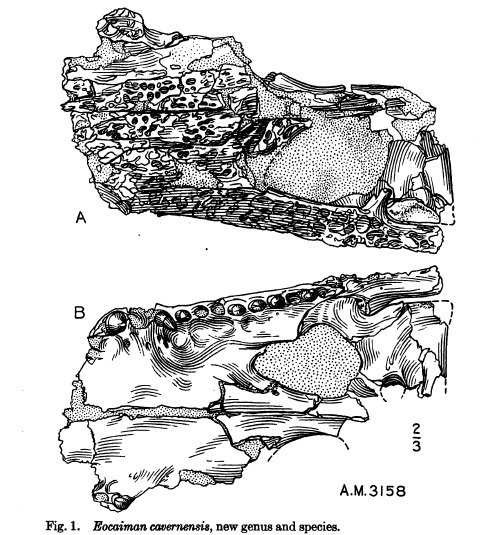
Now, many names in TreeBASE aren't in any of the major name databases (fossils seem particularly poorly supported), which means hunting on Google for the name. In some cases I come across the name and the original reference for the name, which means I can document that the name is correct. For example, TreeBASE taxon T8737 is Eocaiman cavernensis, which doesn't occur in any of the name sources I use (uBio, ITIS, NCBI, IPNI, etc.). It's a fossil crocodilian, described by George Gaylord Simpson in 1933.


The original description in American Museum Novitates is online (hdl:2246/2050), courtesy of the AMNH's DSpace server. So, how do I link the name and the publication -- without me creating a new database to do this? Well, Connotea to the rescue. I add Simpson's paper to Connotea, tagged with the TreeBASE TaxonID T8737, and viola, the information is stored.

Now, to make use of this we need to do a little bit more, such as have a triple store that contains both the TreeBASE names and the Connotea record, but given that Connotea serves RSS 1.0 (i.e., RDF), this is easy.

What I like about this is:

  1. I don't have to do much work

  2. The publication information is stored where others can see it and make use of it (i.e., if my experiments with these ideas fall by the wayside, the data still remain).


Now, back to the tedious task of mapping...

Wednesday, July 12, 2006

Small Pieces Loosely Joined


Just finished reading Small Pieces Loosely Joined. It's a fabulous essay on the nature of the Web. The more I read it the more it confirms my fear that most people talking about biological taxonomy and biodiversity on the Web simply don't "get" the Web. Adopting the Web successfully will require a willingness to accept error, ambiguity, and downplaying "expertise" and "authority". It will be interesting to see what happens.