Showing posts with label biodiversity informatics. Show all posts

Monday, August 28, 2017

Let’s rise up to unite taxonomy and technology

Holly Bik (@hollybik) has an opinion piece in PLoS Biology entitled "Let’s rise up to unite taxonomy and technology" https://doi.org/10.1371/journal.pbio.2002231 (thanks to @sjurdur for bringing this to my attention).

Journal pbio 2002231 g001

It's a passionate plea for integrating taxonomic knowledge and "omics" data. In her article Bik includes a mockup of the kind of tool she'd like to see (based in part on Phinch), and writes:

Step 2: Clicking on a specific data point (e.g., an OTU) will pull up any online information associated with that species ID or taxonomic group, such as Wikipedia entries, photos, DNA sequences, peer-reviewed articles, and geolocated species observations displayed on a map.

This sort of plea has been made any times, and reminds me very much of PLoS's own efforts when they wanted to build a "Biodiversity Hub" and biodiversity informatics basically failed them. The hub itself later closed down.. There's clearly a need for a simply way to summarise what we know about a species, but we've yet to really tackle this (on the face of it) fairly simple task.

Quickly summarising the available information about a species was the motivation behind my little tool iSpecies, which I recently reworked to use DBpedia, GBIF, CrossRef, EOL, TreeBASE and OpenTreeofLife as sources. For the nematode featured in Bik's figure (Desmoscolex) there's not a great deal of easily available information (see http://ispecies.org/?q=Desmoscolex). We can get a little more form other sources not queried by iSpecies, such as BioNames, which aggregates the primary taxonomic literature, see http://bionames.org/search/Desmoscolex.

Part of the problem is that taxonomy is fundamentally a "long tail" field, both in terms of the subject matter (a few very well know species, then millions of poorly known species) and our knowledge of those species (a large, scattered taxonomic literature, much of it not yet digitised, although progress is being made). Furthermore, the names of species (and our conception of them) can change, adding an additional challenge.

But I think we can do a lot better. Simple web-based tools like iSpecies can assemble reasonable information from multiple sources (and in multiple languages) on the fly. It would be nice to expand those sources (the more primary sources the better). The current iSpecies tool searches on species name. This works well if the sources being queried mention that name (e.g., in the title of a paper that has a DOI and is indexed by CrossRef). Given that many of the "omics" datasets Bik works with are likely to have dark taxa, what we'll also need is the ability to search, say, using NCBI taxon ids, and retrieve literature linked to sequences for those taxa

It would also be useful to package those up in a simple API that other tools could consume. For example, if I wanted to improve the utility of iSpecies, one approach would be to package up the results in a JSON object. Perhaps even use JSON-LD (with global identifiers for taxa, documents, etc.) to make it possible for consumers to easily integrate that data with their own.

Taxonomy could be on the brink of another golden age—if we play our cards right. As it is reinvented and reborn in the 21st century, taxonomy needs to retain its traditional organismal-focused approaches while simultaneously building bridges with phylogenetics, ecology, genomics, and the computational sciences.

Taxonomy is, of course, doing just this, albeit not nearly fast enough. There are some pretty serious obstacles, some of them cultural, but some of them due to the nature of the problem. Taxonomic knowledge is massively decentralised, mostly non-digital, and many of the key sources and aggregations are behind paywalls. There is also a fairly large "technical debt" to deal with. Ian Mulvany was recently interviewed by PLoS and he emphasised that because academic publishers had been online from early on they were pioneers, but at the same time this left them with a legacy of older technologies and approaches that can sometimes get in the way of new idea. I think taxonomy suffers from some of the same problems. Because taxonomy has long been involved with computers, sometime we needed up betting on the "wrong" solutions. For example, at one time XML was the new hotness, and people invested a lot of effort in developing XML schema, and then ontologies and RDF vocabularies. Meantime much of the web has moved to simple data formats such as JSON, many specialist vocabularies are gathering dust as schema.org takes off, and projects like Wikidata force us to rethink the need to topic-specific databases.

But these are technical details. For me the key point of "Let’s rise up to unite taxonomy and technology" is that it's a symptom of the continued failure of biodiversity informatics to actually address the needs of its users. People keep asking for fairly simple things, and we keep ignoring them (or explaining why it's MUCH harder than people think, which is another way of ignoring them).

Friday, September 27, 2013

Biodiversity informatics in charts

LogoI've just come back from II Iberian Congress of Biological Systematics (CISA2013) in Barcelona, where I had a great time. I gave a presentation on biodiversity informatics entitled "Biodiversity informatics: why aren't we there yet?". Instead of my usual complaining about what a disaster biodiversity informatics is, and how links are so important (etc., etc.) I tried something a little new and presented a series of charts and diagrams, together with some (not terribly well thought out) interpretations. What I had in mind in doing this was to ask the question "what do these charts tell us about the field?" or, put another way, "what, if anything, do these charts tell us we should be doing?". I envisaged someone in a company say, looking at charts on changes in the market (e.g., numbers of PCs versus laptops, mobile versus desktop Internet consumption, or peak oil) and thinking about what the implications are for their business. By this stage it should be clear I've no idea what I'm talking about, but I hope you get the idea. So, here are some of the charts I showed in my talk, together with some commentary.

Sequencing

0102
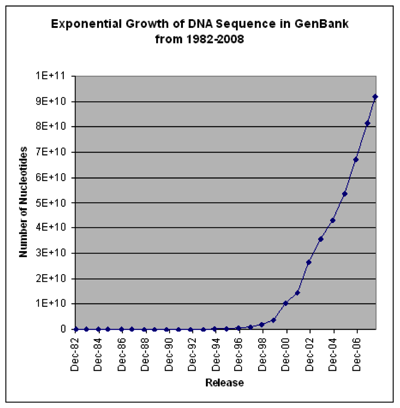
These two charts show that the cost of sequencing is plummeting, and the number of sequences going into GenBank is rising exponentially (note that the GenBank chart is old and predates the step-change in sequencing costs, so growth was exponential even before it became much cheaper). I realise that there is more to sequencing costs than the first chart implies (http://dx.doi.org/10.1186/gb-2011-12-8-125) but the bottom line is we have a flood of data.

Taxonomy

03
The rate of publication of new animal names has been roughly constant in the last few decades. Exactly what these sort of graphs mean is problematic, but my suspicion is that it reflects a discipline working at capacity. There is a limit to how many taxa it can describe, and I suspect a limit to the kinds of taxa being described (i.e., those that can be fairly easily recognised morphologically).

Dark taxa


So we have exponential growth of sequence data coupled with taxonomic output that is essentially flatlining. Perhaps then it's no surprise that we have dark taxa in GenBank (i.e., taxa that don't carry proper Linnaean names):

04

This chart shows the declining number of "invertebrate" taxa in GenBank that have proper scientific names. Unfortunately, it is not trivial to figure out whether these dark taxa represent previously undiscovered biodiversity (i.e., new species) or taxa that have already been described but which we are either unable or unwilling to identify. In any event, exponential growth versus flat line means there is a disconnect between genomics and taxonomy.

The literature gap

05
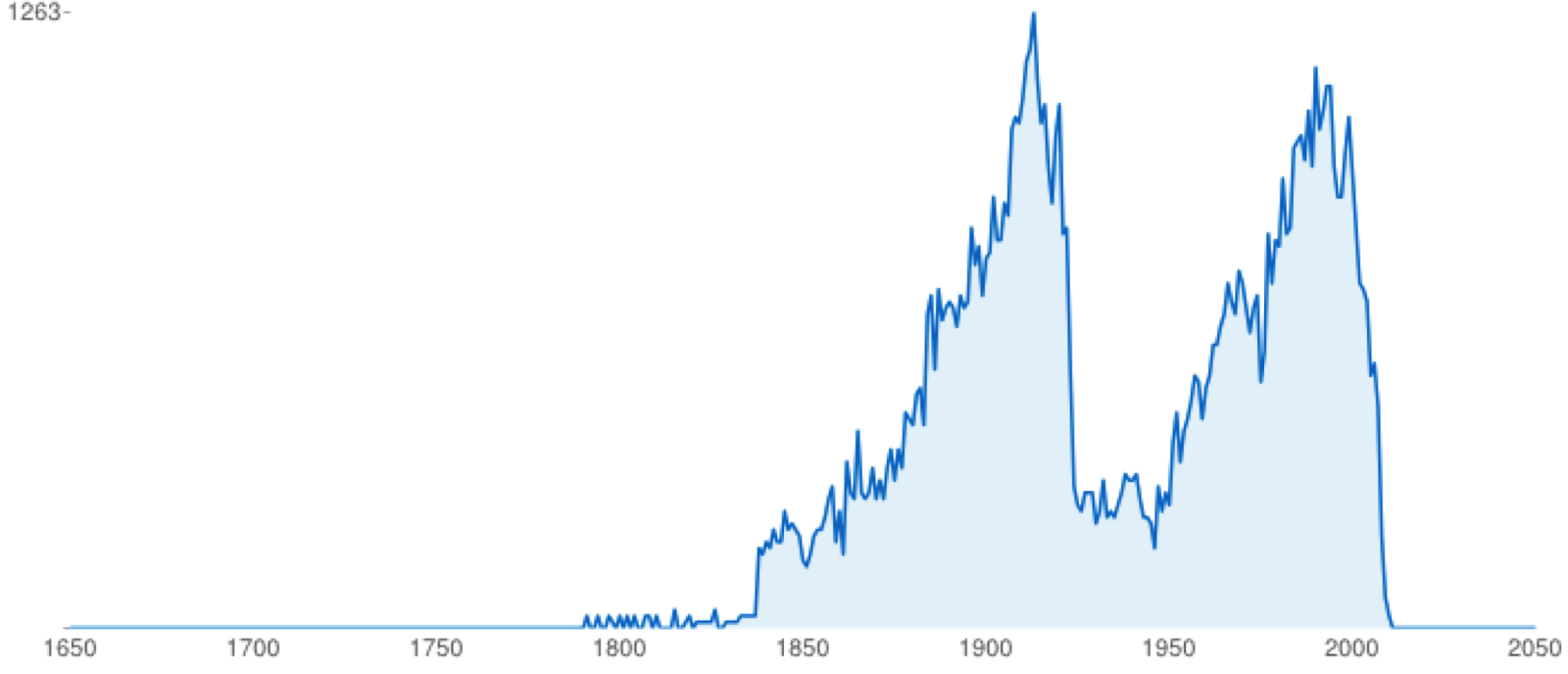
This chart (from BioStor) highlights two things. Firstly, the Biodiversity Heritage Library is not just about old (i.e., pre-1923) literature. Despite that, 1923 is a mass extinction event in terms of access to taxonomic literature. If we date modern open access as getting underway around 2003 (the birth of PLoS) then we have a period of time (1923-2003) where much of the literature about biodiversity is "dark", either not digitised or locked behind a paywall. Some museums and scientific societies are opening up their publications (this is mostly what comprises the second peak in the chart), but much of the 20th century literature is closed to us.

Long tails

06
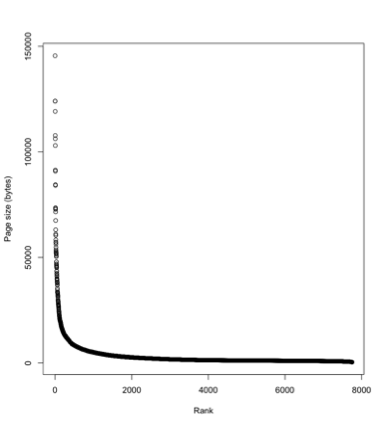
One reason the legacy literature matters is the "long tail" phenomenon. Above is a plot of the size of Wikipedia articles for mammals, where the pages are ranked from largest to smallest. A few mammals have really detailed pages, the vast majority of mammals have small pages ("stubs"). So for most taxa we know only a little, and hence the most recent publication on those taxa might be quite old. This means that if we want to build comparative databases we will need the legacy literature.

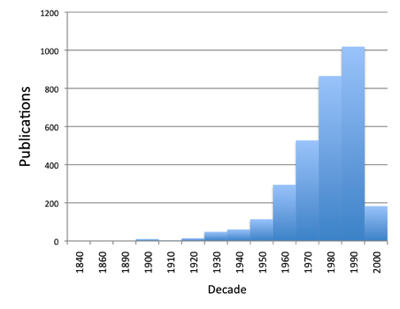
The chart below is a plot of the dates of publication of the sources used by the PanTHERIA database. Many of these are in the gap between 1923 and 2003, and a few date back to the 19th century. Even for a well-studied group such as mammals, the old literature matters.

07

Who publishes taxonomy?

08

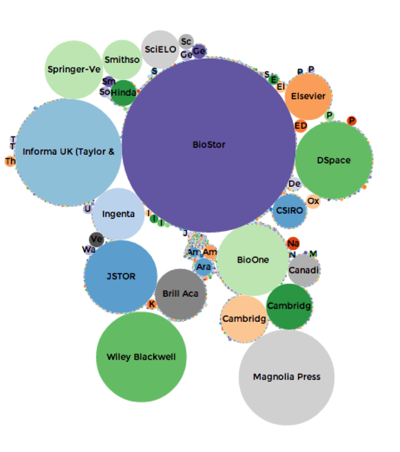
Based on data in BioNames the chart above shows the relative importance of different publishers in terms of how many articles describing new animal taxa they have published. BioStor, which harvests articles from BHL, is the single largest source, which emphasises how important BHL is (all its content is open access). There are some significant commercial publishers (Springer, Elsevier, Taylor and Francis, BioOne) who we would need to talk to about data mining. There is also a huge long tail (hard to see but represented by all the tiny dots) of very small journals that collectively publish quite a lot of taxonomy.

But one thing that is striking about modern animal taxonomy is the emergence of Zootaxa as a "mega journal". The chart below shows time lines of articles-per-decade for the major taxonomic journals in zoology. There is a colossal spike that is Zootaxa. So, if we are interested in data mining at scale Zootaxa looks like the place to start.

09

Where is the biodiversity?


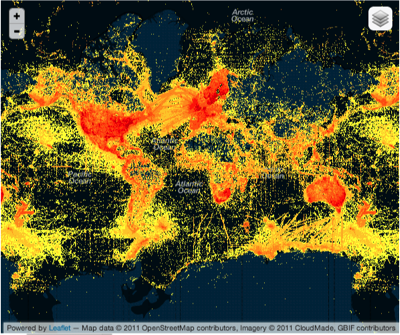
GBIF makes some wonderful maps, like the one below. But it's worrying that it seems to bear more relation to economic development than where the actual biodiversity is. The Amazon basin barely registers, Africa is poorly covered (not to mention China) and there are obvious sampling tracks in the oceans.

10

Maybe crowd sourcing ("citizen science") can come to the rescue? Not so much if this next map is representative. It shows the distribution of photos in the EOL group on Flickr. This looks more like a map of where the iPhones are, rather than where the biodiversity is. If the crowd has the same economic and geographic bias as the experts, then it's not going to help us much.

11

GenBank as a biodiversity database

12
Another "crowd" are people doing sequencing and depositing georeferenced sequences in GenBank. Many of these are DNA barcodes, but some of it is simply well-documented sequence data. A map of animal DNA sequences from GenBank reveals a map (above) that is sparser than GBIF, and shares many of the same biases, but this map and the next diagram make me wonder whether it is useful to take another look at GenBank's role.
13
GenBank has a lot more information than just sequences. Many accessions have geographic information, as well as other useful data such as "host" associations (e.g., for parasites or other close ecological relationships). I played with this a while ago, and found some interesting patterns. Given that GenBank has taxonomy, some geography, and some ecology, and we can compute phylogenetic relationships on the sequence data it could enable a richer biodiversity database than GBIF. Put another way, if we were to build a GBIF-style database on top of GenBank data, what would we do differently?

Data is private


This is a diagram that I published a few years ago http://dx.doi.org/10.1038/npre.2007.1028.1 that showed the gap between published papers on molecular phylogenetics and the number of phylogenies that made their way into TreeBASE. I can't help thinking that this tells us something about what we actually think of the value of individual phylogenies (i.e., they are relatively disposable). This is not to say that phylogenies don't matter, just that any individual phylogeny is relevant for a shorter period of time than the data (e.g., DNA sequences) used to infer that phylogeny.

14

Summary


This is a small, very biased collection of diagrams. There are obviously other diagrams that could be created, and some much more sophisticated analyses that we could do to try and tease out some more implications. In this post I'm largely waving my arms about. But I think it might be useful to explore this further and try and ask some questions about where we are, and where we are going. Or, more to the point, what we should be doing right now.

Thursday, April 18, 2013

Thoughts on GBIC 2012 and a vision of the future of biodiversity informatics

This seems to be the season for big, arm-wavy documents about the future of biodiversity informatics (see A decadal view of biodiversity informatics: challenges and priorities). An equivalent document is being drafted based on the Global Biodiversity Informatics Conference (GBIC 2012) conference. Writing these documents is hard work, they have to balance a set of conflicting visions, predict the future, and communicate a coherent plan to people who either could help make this happen, or feel they have a stake in the outcome.

Leaving all those constraints behind, and waving arms wildly, here's one take on the future of biodiversity informatics. I see three themes.

1. Knowing what we know

We have a limited grasp of how much we actually know, and crap tools to summarise this knowledge. I want a Google Analytics for biodiversity data where I can see at a glance the current state of our knowledge (e.g., what is the rate of sequencing of environmental samples in the Mediterranean? How much of Indonesia's amphibian fauna is in protected areas?). These are fairly trivial queries. If Google can analyse web traffic from sites being hit over a million times per day ( ~ 365 million hits per year) we can do the same thing on GBIF-scale databases. There is huge scope here for cool visualisation of the growth of our knowledge, such as this:

If biologists were explorers (Mammalia)... from Andrew W Hill on Vimeo.


Imagine the GBIF classification like this:

filesystem visualisation from wonderful websolutions on Vimeo.

2. Life stream

Terrible title, but this is where we monitor change, both "organic" and anthropogenic. This is where we use data mining to do a sentiment analysis of the biosphere, looking to detect changes such as outbreaks of disease, invasive species, etc. This builds on 1 but focusses on change. Imagine a "news service" for biology along the lines of tools available to financial markets (e.g., Silobreaker):


This is where we interface with decision makers, in the sense that Braulio Dias's statement "I am convinced that the lack of adequate biodiversity monitoring is at the heart of our difficulties to make convincing arguments" is true, this tackles that question.

3. Modelling the biosphere

Time to model all life on Earth (http://dx.doi.org/10.1038/493295a) is our equivalent of a moon shot (oh how I hate that analogy). Purves et al. have made the case, this is the task that will galvanise people outside the taxonomy/biodiversity community. This is real megascience (1. is data collection, 2. is data mining and analysis). Climate modellers and oceanographers get to do this:


Can we do the same?

Tuesday, April 16, 2013

A decadal view of biodiversity informatics: challenges and priorities

LogoBMC Ecology has published Alex Hardisty and Dave Roberts' white paper on biodiversity informatics:

Hardisty, A., & Roberts, D. (2013). A decadal view of biodiversity informatics: challenges and priorities. BMC Ecology, 13(1), 16. doi:10.1186/1472-6785-13-16

Here are their 12 recommendations (with some comments of my own):

  1. Open Data, should be normal practice and should embody the principles of being accessible, assessable, intelligible and usable.

    Seems obvious, but data providers are often reluctant to open "their" data up for reuse.
  2. Data encoding should allow analysis across multiple scales, e.g. from nanometers to planet-wide and from fractions of a second to millions of years, and such encoding schemes need to be developed. Individual data sets will have application over a small fraction of these scales, but the encoding schema needs to facilitate the integration of various data sets in a single analytical structure.

    No I don't know what this means either, but I'm guessing that it's relevant if we want to attempt this: doi:10.1038/493295a
  3. Infrastructure projects should devote significant resources to market the service they develop, specifically to attract users from outside the project-funded community, and ideally in significant numbers. To make such an investment effective, projects should release their service early and update often, in response to user feedback.

    Put simply, make something that is both useful and easy to use. Simples.
  4. Build a complete list of currently used taxon names with a statement of their interrelationships (e.g. this is a spelling variation; this is a synonym; etc.). This is a much simpler challenge than building a list of valid names, and an essential pre-requisite.

    One of the simplest tasks, first tackled successfully by uBio, now moribund. The Global Names project seems stalled, intent on drowning in acronym soup (GNA,GNI,GNUB, GNITE).
  5. Attach a Persistent Identifier (PID) to every resource so that they can be linked to one another. Part of the PID should be a common syntactic structure, such as ‘DOI: ...’ so that any instance can be simply found in a free-text search.

    DOIs have won the identifier wars, and everything citable (publications, figures, datasets) is acquiring one. The mistake to avoid is forgetting that identifiers need services built on top of them (see http://labs.crossref.org/ for some DOI-related tools). The core service we need is reverse lookup: given this thing (publication, specimen, etc.) what is its identifier?
  6. Implement a system of author identifiers so that the individual contributing a resource can be identified. This, in combination with the PID (above), will allow the computation of the impact of any contribution and the provenance of any resource.

    This is a solved problem, assuming ORCID continues to gain momentum. For past authors VIAF has identifiers (which are being incorporated into Wikipedia).
  7. Make use of trusted third-party authentication measures so that users can easily work with multiple resources without having to log into each one separately.

    Again, a solved problem. People routinely use third parties such as Google and Facebook for this purpose.
  8. Build a repository for classifications (classification bank) that will allow, in combination with the list of taxonomic names, automatic construction of taxonomies to close gaps in coverage.

    Let's not, let's focus on the only two classifications that actually matter because they are linked to data, namely GBIF and NCBI. If we want one classification to coalesce around make it GBIF (NCBI will grow anyway).
  9. Develop a single portal for currently accepted names - one of the priority requirements for most users.

    Yup, still haven't got this, we clearly didn't get the memo about point 3.
  10. Standards and tools are needed to structure data into a linked format by using the potential of vocabularies and ontologies for all biodiversity facets, including: taxonomy, environmental factors, ecosystem functioning and services, and data streams like DNA (up to genomics).

    The most successful vocabulary we've come up with (Darwin Core) is essentially an agreed way to label columns in Excel spreadsheets. I've argued elsewhere that focussing on vocabularies and ontologies distracts from the real prerequisite for linking stuff together, namely reusable identifiers (see 5). No point developing labels for links if you don't have the links.
  11. Mechanisms to evaluate data quality and fitness-for-purpose are required.

    Our data is inaccurate and full of holes, and we lack decent tools for visualising and fixing this (hence my interest in putting the GBIF classification into GitHub).
  12. A next-generation infrastructure is needed to manage ever-increasing amounts of observational data.

    Not our problem, see doi:10.1038/nature11875 (by which I mean lots of people need massive storage, so it will be solved)

Food for thought. I suspect we will see the gaggle of biodiversity informatics projects will seek to align themselves with some of these goals, carving up the territory. Sadly, we have yet to find a way to coalesce critical mass around tackling these challenges. It's a cliché, but I can't help thinking "what would Google do?" or, more, precisely, "what would a Google of biodiversity look like?"

Friday, June 29, 2012

Planet management, GBIF, and the future of biodiversity informatics

Earth russia large verge medium landscape

Next week I'm in Copenhagen for GBIC, the Global Biodiversity Informatics Conference. The goal of the conference is to:
...convene expertise in the fields of biodiversity informatics, genomics, earth observation, natural history collections, biodiversity research and policy needed to set such collaboration in motion.

The collaboration referred to is the agreement to mobilise data and informatics capability to met the Aichi Biodiversity Targets.

I confess I have mixed feelings about the upcoming meeting. There will be something like 100 people attending the conference, with backgrounds ranging from pure science to intergovernmental policy. It promises to be interesting, but whether a clear vision of the future of biodiversity informatics will emerge is another matter.

GBIC is part of the process of "planet management", a phrase that's been around for a while, but I only came across in the Bowker's essay "Biodiversity Datadiversity"1:

Bowker, G. C. (2000). Biodiversity Datadiversity. Social Studies of Science, 30(5), 643–683. doi:10.1177/030631200030005001

Bowker's essay is well worth a read, not least for the choice quotes such as:

Each particular discipline associated with biodiversity has its own incompletely articulated series of objects. These objects each enfold an organizational history and subtend a particular temporality or spatiality. They frequently are incompletely articulated with other objects, temporalities and spatialities — often legacy versions, when drawing on non-proximate disciplines. If one wants to produce a consistent, long-term database of biodiversity-relevant information the world over, all this sounds like an unholy mess. At the very least it suggests that global panopticons are not the way to go in biodiversity data. (p. 675, emphasis added)

and
I have not, in general, questioned the mania to name which is rife in the circles whose work I have described. There is no absolutely compelling connection between the observation that many of the world’s species are dying and the attempt to catalogue the world before they do. If your house is on fire, you do not necessarily stop to inventory the contents before diving out the window. However, as Jack Goody (1977) and others have observed, list-keeping is at the heart of our body politic. It is also, by extension, at the heart of our scientific strategies. Right or wrong, it is what we do. (p. 676, emphasis added)

Given that I'm a fan of the notion of a "global panopticon", and spend a lot of time fussing with lists of names, I find Bowker's views refreshing. Meantime, roll on GBIC2012.


1. Bowker cites Elichirigoity as a source of the term "planet management":

Fernando Elichirigoity (1999), Planet Management: Limits to Growth,
Computer Simulations, and the Emergence of Global Spaces (Evanston, IL: Northwestern
University Press). ISBN 0810115875 (Google Books oP3wVnKpGDkC).

From the limited Google preview, and the review by Edwards, this looks like an interesting book:

Edwards, P. (2000). Book Review:Planet Management: Limits to Growth, Computer Simulation, and the Emergence of Global Spaces Fernando Elichirigoity. Isis, 91(4), 828. doi:10.1086/385020 (PDF here)

Friday, October 28, 2011

Sherborn presentation on Open Taxonomy

Here is my presentation from today's Anchoring Biodiversity Information: From Sherborn to the 21st century and beyond meeting.


All the presentations will be posted online, along with podcasts of the audio. Meantime, presentations by Dave Remsen and Chris Freeland are already online.

Tuesday, October 04, 2011

How many species are there, and why do we get two very different answers from same data?

GlobeTwo papers estimating the total number of species have recently been published, one in the open access journal PLoS Biology:

Camilo Mora, Derek P. Tittensor, Sina Adl, Alastair G. B. Simpson, Boris Worm. How Many Species Are There on Earth and in the Ocean?. PLoS Biol 9(8): e1001127. doi:10.1371/journal.pbio.1001127
SSB logo final
the second in Systematic Biology (which has an open access option but the authors didn't use it for this article):

Mark J. Costello, Simon Wilson and Brett Houlding. Predicting total global species richness using rates of species description and estimates of taxonomic effort. Syst Biol (2011) doi:10.1093/sysbio/syr080

The first paper has gained a lot of attention, in part because Jonathan Eisen Bacteria & archaea don't get no respect from interesting but flawed #PLoSBio paper on # of species on the planet was mightily pissed off about the estimates of the number:
Their estimates of ~ 10,000 or so bacteria and archaea on the planet are so completely out of touch in my opinion that this calls into question the validity of their method for bacteria and archaea at all.

The fuss over the number of bacteria and archaea seems to me to be largely a misunderstanding of how taxonomic databases count taxa. Databases like Catalogue of Life record described species, and most bacteria aren't formally described because they can't be cultured. Hence there will always be a disparity between the extent of diversity revealed by phylogenetics and by classical taxonomy.

The PLoS Biology paper has garnered a lot more reaction than the Systematic Biology paper (e.g., the commentary by Carl Zimmer in the New York TimesHow Many Species? A Study Says 8.7 Million, but It’s Tricky), which arguably has the more dramatic conclusion.

How many species, 8.7 million, or 1.8 to 2.0 million?

Whereas the Mora et al. in PLoS Biology concluded that there are some 8.7 million (±1.3 million SE) species on the planet, Costello et al. in Systematic Biology arrive at a much more conservative figure (1.8 to 2.0 million). The implications of these two studies are very different, one implies there's a lot of work to do, the other leads to headlines such as 'Every species on Earth could be discovered within 50 years'.

What is intriguing is that both studies use the same databases, Catalogue of Life and the World's Register of Marine Species, and yet arrive at very different results.

So, the question is, how did we arrive at two very different answers from the same data?


Thursday, September 15, 2011

Anchoring Biodiversity Information: from Sherborn to the 21st century and beyond

Next month I'll be speaking in London at The Natural History Museum at a one day event Anchoring Biodiversity Information: From Sherborn to the 21st century and beyond. This meeting is being organised by the International Commission on Zoological Nomenclature and the Society for the History of Natural History, and is partly a celebration of his major work Index Animalium and partly a chance to look at the future of zoological nomenclature.

Details are available from the ICZN web site. I'll be giving a a talk entitled "Towards an open taxonomy" (no, I don't know what I mean by that either). But it should be a chance to rant about the failure of taxonomy to embrace the Interwebs.

SherbornPoster Sept 11

Wednesday, April 14, 2010

Biodiversity informatics = #fail (and what to do about it)

The context for this post is the PLos markup meeting held at the California Academy of Sciences over the weekend (many thanks to Brian Fisher for the invitation). PLoS are launching a "biodiversity hub" and were looking for ideas on how to implement this. The fact that nobody -- least of all those attending from PLoS -- could adequately explain what a hub was made things a tad tricky, but that didn't matter, because PLoS did know when the first iteration of the hub was going live (later this summer). So, once we got past the fact that PLoS operates with a timeline that says "cool stuff will happen here" then sets about figuring what that cool stuff will actually be (in retrospect you gotta admire this approach), we then tried to figure out what PLoS needed from us.

That's when things got messy. It became very clear that PLoS wanted basic things like, you know, information on names, being able to link to specimens, etc., and our community can't do this, at least not yet. Nor can we provide simple answers to simple questions. For example, Rich Pyle, gave an overview of taxonomic names, nomenclature, concepts, and the horrendous alphabet soup of databases (uBio, ZooBank, IPNI, IndexFungorum, GNA, GNUB, GNI, CoL, etc.) that have a stake in this. You could see the look of horror in the eyes of the PLoS developers who were tasked with making the hub happen ("run away, run away now"). And this was after the simple version of things. In a week where taxonomy was in the news because of the possibility that Drosophila melanogaster would have to, *cough*, change its name (doi:10.1038/464825a)1, this was not a great start.

At each step when we outlined some of the stuff that would be cool, it became clear we couldn't deliver what we were actually arguing PLoS should do. For example, we have millions of digitised specimen records, and lots of papers refer to these specimens by name, but because individual specimens don't have URIs we can't refer to them (instead we have horrific query interfaces like TAPIR, see Accessing specimens using TAPIR or, why do we make this so hard?). We're digitising the taxonomic literature, but don't provide a way to link this to modern literature at the level of granularity publishers use (i.e., articles).

Readers of this blog will have heard this all before, but what made this meeting different was we actually had a "customer" rock up and ask for our help to enhance their content and create something useful for the community...and the best we could do was um and er and confess we couldn't really give them what they wanted2.

Think of the children
It's time biodiversity informatics stopped playing "let's make an acronym", stopped trying to keep taxonomists happy (face it, that's never going to happen, and frankly, they'll be extinct soon anyway), and stopped obsessing with who owns the data, and instead focus on delivering some simple, solid, services that address the needs of people who, you know, will actually do something useful with them. Otherwise we'll be like digital librarians, who thought people would search the way librarians do, then got their nose out of joint when Google ate their lunch.

It's time to make some simple services, and stop the endless cycle of inward looking meetings where we talk to each other. We need to learn to hide what people don't need (nor want) to see. We need to be able to:

  1. Extract entities from text, e.g. scientific names, specimen codes, localities, GenBank accession numbers.

  2. Lookup a taxonomic name and return basic information about that name (rather like iSpecies but as a service).

  3. Make specimen codes resolvable.

  4. Make taxonomic literature accessible using identifiers and tools publishers know about (that means DOIs and OpenURL).


We're close to a lot of this already, but we're still far enough away to make some of this non-trivial. And we keep having meetings about this stuff, and fail to actually get it done. Something is wrong somewhere when E O Wilson has his name on yet another call for megabucks for a biodiversity project (the "Barometer of Life, doi:10.1126/science.1188606). At what point will someone ask "um, we've given you guys a lot of money already, why can't you tell me the stuff we need to know?"

Let me just say that I'm a short term pessimist, but a long term optimist. The things I complain about will get fixed, one day. It's just that I see little evidence they'll get fixed by us. Prove me wrong, go on, I dare you...

  1. Personally I'm intensely relaxed about Drosophila melanogaster remaining Drosophila melanogaster, even if it ends up in a clade surrounded by flies with other generic names. Having (a) a stable name and (b) knowing where it fits in the tree of life is all we need to do science.

  2. At the meeting I couldn't stop thinking of the scene in The West Wing where President Bartlett walks up to the Capitol for an impromptu meeting with the Speaker of the House to sort out the budget, and is left waiting outside while the Speaker sorts out his game plan. By the time the Speaker is ready, the President has turned on his heels and left, making the Speaker look a tad foolish.


Wednesday, May 06, 2009

Integrating and displaying data using RSS


Although I'd been thinking of getting the wiki project ready for e-Biosphere '09 as a challenge entry, lately I've been playing with RSS has a complementary, but quicker way to achieve some simple integration.

I've been playing with RSS on and off for a while, but what reignited my interest was the swine flu timemap I made last week. The neatest thing about the timemap was how easy it was to make. Just take some RSS that is geotagged and you get the timemap (courtesy of Nick Rabinowitz's wonderful Timemap library).

So, I began to think about taking RSS feeds for, say journals and taxonomic and genomic databases and adding them together and displaying them using tools such as timemap (see here for an earlier mock up of some GenBank data). Two obstacles are in the way. The first is that not every data source of interest provides RSS feeds. To address this I've started to develop wrappers around some sources, the first of which is ZooBank.

The second obstacle is that integration requires shared content (e.g., tags, identifiers, or localities). Some integration will be possible geographically (for example, adding geotagged sequences and images to a map), but this won't work for everything. So, I need to spend some time trying to link stuff together. In the case of Zoobank there's some scope for this, as ZooBank metadata sometimes includes DOIs, which enables us to link to the original publication, as well as bookmarking services such as Connotea. I'm aiming to include these links within the feed, as shown in this snippet (see the <link rel="related"...> element):


<entry>
<title>New Protocetid Whale from the Middle Eocene of Pakistan: Birth on Land, Precocial Development, and Sexual Dimorphism</title>
<link rel="alternate" type="text/html" href="http://zoobank.org/urn:lsid:zoobank.org:pub:8625FB9A-1FC3-43C3-9A99-7A3CDE0DFC9C"/>
<updated>2009-05-06T18:37:34+01:00</updated>
<id>urn:uuid:c8f6be01-2359-1805-8bdb-02f271a95ab4</id>
<content type="html">Gingerich, Philip D., Munir ul-Haq, Wighart von Koenigswald, William J. Sanders, B. Holly Smith & Iyad S. Zalmout<br/><a href="http://dx.doi.org/10.1371/journal.pone.0004366">doi:10.1371/journal.pone.0004366</a></content>
<summary type="html">Gingerich, Philip D., Munir ul-Haq, Wighart von Koenigswald, William J. Sanders, B. Holly Smith & Iyad S. Zalmout<br/><a href="http://dx.doi.org/10.1371/journal.pone.0004366">doi:10.1371/journal.pone.0004366</a></summary>
<link rel="related" type="text/html" href="http://dx.doi.org/10.1371/journal.pone.0004366" title="doi:10.1371/journal.pone.0004366"/>
<link rel="related" type="text/html" href="http://bioguid.info/urn:lsid:zoobank.org:pub:8625FB9A-1FC3-43C3-9A99-7A3CDE0DFC9C" title="urn:lsid:zoobank.org:pub:8625FB9A-1FC3-43C3-9A99-7A3CDE0DFC9C"/>
</entry>


What I'm hoping is that there will be enough links to create something rather like my Elsevier Challenge entry, but with a much more diverse set of sources.

Tuesday, April 21, 2009

GBIF and Handles: admitting that "distributed" begets "centralized"

The problem with this ... is that my personal and unfashionable observation is that “distributed” begets “centralized.” For every distributed service created, we’ve then had to create a centralized service to make it useable again (ICANN, Google, Pirate Bay, CrossRef, DOAJ, ticTocs, WorldCat, etc.).
--Geoffrey Bilder interviewed by Martin Fenner

Thinking about the GUID mess in biodiversity informatics, stumbling across some documents about the PILIN (Persistent Identifier Linking INfrastructure) project, and still smarting from problems getting hold of specimen data, I thought I'd try and articulate one solution.

Firstly, I think biodiversity informatics has made the same mistake as digital librarians in thinking that people care where the get information from. We don't, in the sense that I don't care whether I get the information from Google or my local library, I just want the information. In this context local is irrelevant. Nor do I care about individual collections. I care about particular taxa, or particular areas, but not collections (likewise, I may care about philosophy, but not philosophy books at Glasgow University Library). I think the concern for local has lead to an emphasis on providing complex software to each data provider that supports operations (such as search) that don't scale (live federated search simply doesn't work), at the expense of focussing on simple solutions that are easy to use.

In a (no doubt unsuccessful) attempt to think beyond what I want, let's imagine we have several people/organisations with interests in this area. For example:

Imagine I am an occasional user. I see a specimen referred to, say a holotype, I want to learn more about that specimen. Is there some identifier I can use to find out more. I'm used to using DOIs to retrieve papers, what about specimens. So, I want:
  1. identifiers for specimens so I can retrieve more information

Imagine I am a publisher (which can be anything from a major commercial publisher to a blogger). I want to make my content more useful to my readers, and I've noticed that other's are doing this so I better get onboard. But I don't want to clutter my content with fragile links -- and if a link breaks I want it fixed, or I want a cached copy (hence the use of WebCite by some publishers). If I want a link fixed I don't want to have to chase up individual providers, I want one place to go (as I do for references if a DOI breaks). So, I want:
  1. stable links with some guarantee of persistence
  2. somebody who will take responsibility to fix the broken ones

Imagine I am a data provider. I want to make my data available, but I want something simple to put in place (I have better things to do with my time, and my IT department keep a tight grip on the servers). I would also like to be able to show my masters that this is a good thing to do, for example by being able to present statistics on how many times my data has been accessed. I'd like identifiers that are meaningful to me (maybe carry some local "branding"). I might not be so keen on some central agency serving all my data as if it was theirs. So, I want
  1. simplicity
  2. option to serve my own data with my own identifiers

Imagine I am an power user. I want lots of data, maybe grouped in ways that the data providers hadn't anticipated. I'm in a hurry, so I want to get this stuff quickly. So I want:
  1. convenient, fast APIs to fetch data
  2. flexible search interfaces would be nice, but I may just download it myself because it's probably quicker if I do it myself

Imagine I am an aggregator. I want data providers to have a simple harvesting interface so that I can grab the data. I don't need a search interface to their data because I can do it much faster if I have the data locally (federated search sucks). So I want:
  1. the ability to harvest all the data ("all your data are belong to me")
  2. a simple way to update my copy of provider's data when it changes


It's too late in the evening for me to do this justice, but I think a reasonable solution is this:
  1. Individual data providers serve their data via URLs, ideally serving a combination of HTML and RDF (i.e., linked data), but XML would be OK
  2. Each record (e.g., specimen) has an identifier that is locally unique, and the identifier is resolvable (for example, by simply appending it to a URL)
  3. Each data provider is encouraged to reuse existing GUIDs wherever possible, (e.g., for literature (DOIs) and taxonomic names) to make their data "meshable"
  4. Data provider can be harvested, either completey, or for records modified after a given date
  5. A central aggregator (e.g., GBIF) aggregates all specimen/observation data. It uses Handles (or DOIs) to create GUIDs, comprising a naming authority (one for each data provider), and an identifier (supplied by the data provider, may carry branding, e.g. "antweb:casent0100367"), so an example would be "hdl:1234567/antweb:casent0100367" or "doi:10.1234/antweb:casent0100367". Note that this avoids labeling these GUIDs as, say, http://gbif.org/1234567/antweb:casent0100367
  6. Handles resolve to data provider URL, but cached aggregator copy of metadata may be used if data provide is offline
  7. Publishers use "hdl:1234567/antweb:casent0100367" (i.e., authors use this when writing manuscripts), as they can harass central aggregator if they break
  8. Central aggregator is reponsible for generating reports to providers of how there data has been used, e.g. how many times "cited" in literaure

So, GBIF (for whoever steps up to the plate) would use handles (or DOIs). This gives them the tools to manage the identifiers, plus tells the world that we are serious about this. Publishers can trust that the links to millions of specimen records won't disappear. Providers don't have complex software to install, removing one barrier to making more data available.

I think it's time we made a serious effort to address these issues.

Wednesday, March 18, 2009

London Calling

Busy day yesterday, giving two talks, one at The Natural History Museum, one at the British Library. Slides for the NHM talk are below. Karen James pointed out the irony that a talk where I gave the NHM a hard time for being backward about embracing digitisation can't be viewed on most PCs at the NHM because SlideShare requires a recent version of Flash (which users can't install without IT's permission), and the downloaded presentation won't open because the NHM uses an older version of MS Office. So much for my attempts to share the slides. There will also be a video available at some point.

The second presentation was at the British Libraries "Talk Science" series, for some background see the forum on Nature Network. There will be a podcast available of this presentation. In her introduction to my talk, Sarah Kemmitt quoted from a recent paper by Antonio G. Valdecasas ([JACC]1175-5326:1820@41 where he described Vagabundia sci:
Vagabundia comes from the Spanish word 'vagabundo' that means 'wanderer'. It is a feminine substantive; sci refers to Science Citation Index. We pointed out some time ago (Valdecasas et al. 2000) that the popularity of the Science Citation Index (SCI) as a measure of ‘good’ science has been damaging to basic taxonomic work. Despite statements to the contrary that SCI is not adequate to evaluate taxonomic production (Krell 2000), it is used routinely to evaluate taxonomists and prioritize research grant proposals. As with everything in life, SCI had a beginning and will have an end. Before it becomes history, I dedicate this species to this sociological tool that has done more harm than good to taxonomic work and the basic study of biodiversity. Young biologists avoid the 'taxonomic trap' or becoming taxonomic specialists (Agnarsson & Kuntner 2007) due to the low citation rate of strictly discovery-oriented and interpretative taxonomic publications. Lack of recognition of the value of these publications, makes it difficult for authors to obtain grants or stable professional positions.

My own feeling is that SCI probably does a reasonable job of ranking the impact of taxonomic publication, the real task is to broaden our notion of what gets cited.

Tuesday, October 07, 2008

Biodiversity Service Status

The rather frail nature of biodiversity services (some of the major players have had service breaks in the last few weeks) has prompted me to revisit Dave Vieglais's BigDig and extend it to other services, such as uBio, EOL, and TreeBASE, as well as DSpace repositories and tools such as Connotea.

The result is at http://bioguid.info/status/. The idea is to poll each service once an hour to see if it is online. Eventually I hope to draw some graphs for each service, to get some idea of how reliable it is.

Much of my own work depends on using web sites and services, and I'm constantly frustrated when they go offline (some times for months at a time).

My aim is to be constructive. I well aware that reliability is not easy, and some tools that I've developed myself have disappeared. But I think as a community we need to do a lot better if biodiversity informatics is to deliver on its promise.

The list of service is biased by what I use. I'm also aware that some of the DiGIR provider information is out of date (I basically lifted the list from the BigDig, I'll try and edit this as time allows).

Comments (and requests for adding services) are welcome. There is a comment box at the bottom of the web page, which uses Disqus, a very cool comment system that enables you to keep track of your comments across multiple sites. It also supports OpenID.

Thursday, August 14, 2008

BNCOD 2008 Workshop


The proceedings of the BNCOD 2008 Workshop on "Biodiversity Informatics: challenges in modelling and managing biodiversity knowledge" are online. This workshop was held in conjunction with the 25th British National Conference on Databases (BNCOD 2008) at Cardiff, Wales. The papers make interesting reading.

Exploring International Plant Names Index (IPNI) Data using Visualisation by Nicola Nicolson [PDF]
This paper describes visualisation as a means to explore data from the International Plant Names Index (IPNI). Several visualisations are used to display large volumes of data and to help data standardisation efforts. These have potential uses in data mining and in the exploration of taxon concepts.
Nicky explores some visualisations of the IPNI plant name database. Unfortunately only one of these (arguably the east exciting one) is shown in the PDF. The visualisations of citation history using Timeline, and social networks using prefuse are mentioned, but not shown.

Scratchpads: getting biodiversity online, redefining publication by Vince Smith et al. [PDF]
Taxonomists have been slow to adopt the web as a medium for building research communities. Yet, web-based communities hold great potential for accelerating the pace of taxonomic research. Here we describe a social networking application (Scratchpads) that enables communities of biodiversity researchers to manage and publish their data online. In the first year of operation 466 registered users comprising 53 separate communities have collectively generated 110,000 pages within their Scratchpads. Our approach challenges the traditional model of scholarly communication and may serve as a model to other research disciplines beyond biodiversity science.
This is a short note describing Scratchpads, which are built using the Drupal content management system (CMS). Scratchpads provide a simple way for taxonomists to get their content online. Based in large measure on the success of scratchpads, EOL will use Drupal as the basis of their "Lifedesks". There are numerous scratchpads online, although the amount and quality of content is, um, variable.

Managing Biodiversity Knowledge in the Encyclopedia of Life by Jen Schopf et al. [PDF]
The Encyclopedia of Life is currently working with hundreds of Content Providers to create 1.8 million aggregated species pages, consisting of tens of millions of data objects, in the next ten years. This article gives an overview of our current data management and Content Provider interactions.
This is a short note on EOL itself. I've given my views on EOL's progress (or, rather, lack thereof) elsewhere (here, here and here). The first author on this paper has left the project, and at least one of the other authors is leaving. It seems EOL has yet to find its feet (it certainly has no idea of how to use blogs).


Distributed Systems and Automated Biodiversity Informatics: Genomic Analysis and Geographic Visualization of Disease Evolution by Andrew Hill and Robert Guralnick [doi:10.1007/978-3-540-70504-8_28]
A core mission in biodiversity informatics is to build a computing infrastructure for rapid, real-time analysis of biodiversity information. We have created the information technology to mine, analyze, interpret and visualize how diseases are evolving across the globe. The system rapidly collects the newest and most complete data on dangerous strains of viruses that are able to infect human and animal populations. Following completion, the system will also test whether positions in the genome are under positive selection or purifying selection, a useful feature to monitor functional genomic charac-teristics such as, drug resistance, host specificity, and transmissibility. Our system’s persistent monitoring and reporting of the distribution of dangerous and novel viral strains will allow for better threat forecasting. This information system allows for greatly increased efficiency in tracking the evolution of disease threats.
This paper is was one of two contributions chosen to be proceedings BNCOD 2008 ("Sharing Data, Information and Knowledge", doi:10.1007/978-3-540-70504-8, ISBN 978-3-540-70503-1). Rob Guralnick has put a free version online (see his comment below). It describes the very cool system being developed to provide near real time visualisation of disease spread and evolution, and builds on some earlier work published in Systematic Biology (doi:10.1080/10635150701266848).

LSID Deployment in the Catalogue of Life by Ewen Orme et al. [PDF]
In this paper we describe a GBIF/TDWG-funded project in which LSIDs have been deployed in the Catalogue of Life’s Annual and Dynamic Checklist products as a means of identifying species and higher taxa in these large species catalogues. We look at the technical infras- tructure requirements and topology for the LSID resolution process and characteristics of the RDF (Resource Description Framework) metadata returned by the resolver. Such characteristics include the use of concepts and relationships taken from the TDWG (Taxonomic Database Working Group) ontology and how a given taxon LSID relates to others includ- ing those issued by database providers and those above and below it in the taxonomic tree. Finally we evaluate the pro ject and LSID usage in general. We also look to the future when the CoL LSID infrastructure will have to deal changing taxonomic information, annually in the case of the Annual Checklist and possibly much more frequently in the case of the Dynamic Checklist.

Although I was an early adopter of LSIDs (in my now defunct Taxonomic Search Engine doi:10.1186/1471-2105-6-48 and the very-much alive LSID Tester, doi:10.1186/1751-0473-3-2), I have some reservations about them. The Catalogue of Life uses UUIDs to generate the LSID identifier, which makes for rather ugly looking LSIDs, as David Shorthouse has complained. For example, the LSID for Pinnotheres pisum urn:lsid:catalogueoflife.org:taxon:ef0ae064-29c1-102b-9a4a-00304854f820:ac2008 (gack). Why these ugly UUIDs? Well, one advantage is that they can be generated in a distributed fashion and remain unique. This would make sense for a project like the Catalogue of Life, which aggregates names from a range of contributors, but in actual fact all the LSIDs at present are of the form "xxxxxxxx-29c1-102b-9a4a-00304854f820", indicating that they are being generated centrally (by MySQL's UUID function, in this case).

Ironically, when I was talking to Frank Bisby earlier this year, he implied that LSIDs would change with each release if the information about a name changed, thus failing to solve the existing, fundamental design flaw in the Catalogue of Life, namely the lack of stable identifiers! So, at first glance we are stuck with hideous-looking identifiers that may be unstable. Hmmm...

Workflow Systems for Biodiversity Researchers: Existing Problems and Potential Solutions by Russel McIver et al. [PDF]
In this paper we discuss the potential that scientific work- flow systems have to support biodiversity researchers in achieving their goals. This potential comes through their ability to harness distributed resources and set up complex, multi-stage experiments. However, there remain concerns over the usability of existing workflow systems and re- search still needs to be done to help match the functionality of the soft- ware to the needs of its users. We discuss some of the existing concerns regarding workflow systems and propose three potential interfaces in- tended to improve workflow usability. We also outline the software ar- chitecture that we have adopted, which is designed to make our proposed workflow interface software interoperable across key workflow systems.
Not sure what to make of this paper. Workflows seem to generate an awful lot of publications, and few tools that people actually use.


Visualisation to Aid Biodiversity Studies through Accurate Taxonomic Reconciliation by Martin Graham et al. [doi:10.1007/978-3-540-70504-8_29]
All aspects of organismal biology rely on the accurate identification of specimens described and observed. This is particularly important for ecological surveys of biodiversity, where organisms must be identified and labelled, both for the purposes of the original research, but also to allow reinterpretation or reuse of collected data by subsequent research projects. Yet it is now clear that biological names in isolation are unsuitable as unique identifiers for organisms. Much modern research in ecology is based on the integration (and re-use) of multiple datasets which are inherently complex, reflecting any of the many spatial and temporal environmental factors and organismal interactions that contribute to a given ecosystem. We describe visualization tools that aid in the process of building concept relations between related classifications and then in understanding the effects of using these relations to match across sets of classifications.
The second contribution published in the conference proceedings, but there is also free version available here from the project's blog. The paper describes TaxVis, a project developing visualisation techniques for comparing multiple taxonomic hierarchies.

The paper discusses taxonomic concepts and the difficulty of establishing what a taxonomist meant when they used a particular name. As much as I understand the argument, I can't shake the feeling that obsessing about taxonomic concepts is ultimately a dead end. It won't scale, and in an age of DNA barcoding, it becomes less and less relevant.

Releasing the content of taxonomic papers: solutions to access and data mining by Chris Lyal and Anna Weitzman [PDF]
Taxonomic information is key to all studies of biodiversity. Taxonomic literature contains vast quantities of that information, but it is under-utilised because it is difficult to access, especially by those in biodiverse countries and non-taxonomists. A number of initiatives are making this literature available on the Web as images or even as unstructured text, but while that improves accessibility, there is more that needs to be done to assist users in locating the publication; locating the relevant part of the publication (article, chapter etc) and locating the text or data required within the relevant part of the publication. Taxonomic information is highly structured and automated scripts can be used to mark-up or parse data from it into atomised pieces that may be searched and repurposed as needed. We have developed a schema, taXMLit that allows for mark-up of taxonomic literature in this way. We have also developed a prototype system, INOTAXA that uses literature marked up in taXMLit for sophisticated data discovery.
This is a nice overview of the challenge of extracting information from legacy literature. There are numerous challenges facing this work, including taks that are trivial for people, such as determining when an article starts and ends, but which are challenging for computers (see Lu et al. doi:10.1145/1378889.1378918, free copy here -- there is a job related to this question available now). Related efforts are the TaxonX markup being used by Plazi. My own view is that for legacy literature heavy markup is probably overkill, decent text mining will be enough. The real challenge is to stop the rot at source, and enable new taxonomic publications to be marked up as part of the authoring and publishing process.

An architecture to approach distributed biodiversity pollinators relational information into centralized portals based on biodiversity protocols by Pablo Salvanha et a. [PDF]
The present biodiversity distributed solution using DiGIR / TAPIR protocols and the Darwincore2 schema has been very valuable in the centralized portals, which that can provide distributed information in a very quickly way. Using the same concept this paper presents an architecture based on the case study of pollinators to bring the centralization of the relational information to those portals. This architecture is based on a technological structure to facilitate the implementation and extraction from the providers of that relational information, and proposes a model to make this information reliable to be used with the present specimens information on the portal database.
This is a short note on extending DarwinCore to include information about pollination relationships. The wisdom of doing this has been question (see Roger Hyam's comment on the proposal).

A Pan-European Species-directories Infrastructure (PESI) by Charles Hussey and Yde de Jong [PDF]
This communication introduces the rationale and aims of a new Europe-wide biodiversity informatics project. PESI defines and coordinates strategies to enhance the quality and reliability of European biodiversity information by integrating the infrastructural components of four major community networks on taxonomic indexing, namely those of marine life, terrestrial plants, fungi and animals, into a joint work programme. This will include functional knowledge networks of both taxonomic experts and regional focal points, which will collaborate on the establishment of standardised and authoritative taxonomic (meta-) data. In addition PESI will coordinate the integration and synchronisation of the European taxonomic information systems into a joint e-infrastructure and the creation of a common user-interface disseminating the pan- European checklists and associated user-services results.
This paper describes PESI, yet another mega-science project in biodiversity, complete with acronyms, work packages, and vacuous, buzzword-compliant statements. Just what the discipline needs...