Friday, October 28, 2011

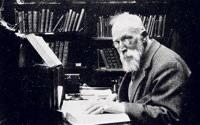
Sherborn presentation on Open Taxonomy

Here is my presentation from today's Anchoring Biodiversity Information: From Sherborn to the 21st century and beyond meeting.


All the presentations will be posted online, along with podcasts of the audio. Meantime, presentations by Dave Remsen and Chris Freeland are already online.

Thursday, October 27, 2011

Linking taxonomic names to literature: beyond digitised 5×3 index cards

Pubs
Tomorrow is the Anchoring Biodiversity Information: From Sherborn to the 21st century and beyond meeting. It should be an interesting gathering, albeit overshadowed by the sudden death of Frank Bisby.

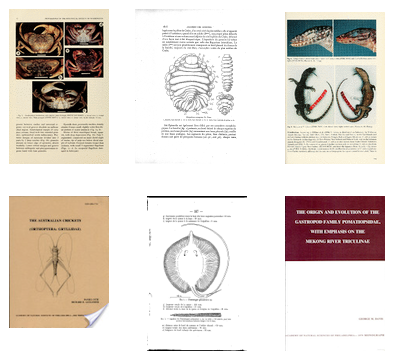
I'm giving a talk entitled "Open Taxonomy", in which I argue that most taxonomic databases are little more than digitised collections of 5×3 index cards, where literature is treated as dumb citation strings rather than as resources with digital identifiers. To make the discussion concrete I've created a mapping between the Index to Organism Names (ION) database and a range of bibliographic sources, such as CrossRef (for DOIs), BioStor, JSTOR, etc.

This mapping is online at http://iphylo.org/~rpage/itaxon/.

So far I've managed to link some 200,000 animal names to a literature identifier, and a good fraction of these articles are freely available, either as images in BioStor and Gallica (for I've created a simple viewer) or as PDFs (which are displayed using Google Docs.

Some examples are:


The site is obviously a work in progress, and there's a lot to be done to the interface, but I hope it conveys the key point: a significant fraction of the primary taxonomic literature is online, and we should be linking to this. The days of digitised 5×3 index cards are past.


Friday, October 21, 2011

Final thoughts on TDWG RDF challenge

Quick final comment on the TDWG Challenge - what is RDF good for?. As I noted in the previous post, Olivier Rovellotti (@orovellotti) and Javier de la Torre (@jatorre) have produced some nice visualisations of the frog data set:
Cartodb
Nice as these are, I can't help feeling that they actually help make my point about the current state of RDF in biodiversity informatics. The only responses to my challenge have been to use geography, where the shared coordinate system (latitude and longitude) facilitates integration. Having geographic coordinates means we don't need to have shared identifiers to do something useful, and I think it's no accident that GBIF is one of the most important resources we have. Geography is also the easiest way to integrate across other fields (e.g., climate).

But what of the other dimensions? What I'm really after are links across datasets that enable us to make new inferences, or address interesting questions. The challenge is still there...

Thursday, October 20, 2011

Reflections on the TDWG RDF "Challenge"

This is a follow up to my previous post TDWG Challenge - what is RDF good for? where I'm being, frankly, a pain in the arse, and asking why we bother with RDF? In many ways I'm not particularly anti-RDF, but it bothers me that there's a big disconnect between the reasons we are going down this route and how we are actually using RDF. In other words, if you like RDF and buy the promise of large-scale data integration while still being decentralised ("the web as database"), then we're doing it wrong.

As an aside, my own perspective is one of data integration. I want to link all this stuff together so I can follow a path through multiple datasets and extract the information I want. In other words, "linked data" (little "l", little "d"). I'm interested in fairly light weight integration, typically through shared identifiers. There is also integration via ontologies, which strikes me as a different, if related, problem, that in many ways is closer to the original vision of the Semantic Web as a giant inference engine. I think the concerns (and experience) of these two communities are somewhat different. I don't particularly care about ontologies, I want key-value pairs and reusable identifiers so I can link stuff together. If, for example, you're working on something like Phenoscape, then I think you have a rather more circumscribed set of data, with potentially complicated interrelationships that you want to make inferences on, in which case ontologies are your friend.

So, I posted a "challenge". It wasn't a challenge so much as a set of RDF to play with. What I'm interested in is seeing how easily we can string this data together to learn stuff. For example, using the RDF I posted earlier here is a table listing the name, conservation status, publication DOI and date, and (where available) image from Wikipedia for frogs with sequences in GenBank.

SpeciesStatusDOIYear describedImage
Atelopus nanayCRhttp://dx.doi.org/10.1655/0018-0831(2002)058[0229:TNSOAA]2.0.CO;22002
Eleutherodactylus mariposaCRhttp://dx.doi.org/10.2307/14669621992
Phrynopus kauneorumCRhttp://dx.doi.org/10.2307/15659932002
Eleutherodactylus eunasterCRhttp://dx.doi.org/10.2307/15630101973
Eleutherodactylus amadeusCRhttp://dx.doi.org/10.2307/14455571987
Eleutherodactylus lamprotesCRhttp://dx.doi.org/10.2307/15630101973
Churamiti maridadiCRhttp://dx.doi.org/10.1080/21564574.2002.96354672002
Eleutherodactylus thorectesCRhttp://dx.doi.org/10.2307/14453811988
Eleutherodactylus apostatesCRhttp://dx.doi.org/10.2307/15630101973
Leptodactylus silvanimbusCRhttp://dx.doi.org/10.2307/15636911980
Eleutherodactylus sciagraphusCRhttp://dx.doi.org/10.2307/15630101973
Bufo chavinCRhttp://dx.doi.org/10.1643/0045-8511(2001)001[0216:NSOBAB]2.0.CO;22001
Eleutherodactylus fowleriCRhttp://dx.doi.org/10.2307/15630101973
Ptychohyla hypomykterCRhttp://dx.doi.org/10.2307/36720601993
Hyla suweonensisDDhttp://dx.doi.org/10.2307/14441381980
Proceratophrys concavitympanumDDhttp://dx.doi.org/10.2307/15654122000
Phrynopus bufoidesDDhttp://dx.doi.org/10.1643/CH-04-278R22005
Boophis periegetesDDhttp://dx.doi.org/10.1111/j.1096-3642.1995.tb01427.x1995
Phyllomedusa duellmaniDDhttp://dx.doi.org/10.2307/14446491982
Boophis liamiDDhttp://dx.doi.org/10.1163/1568538033224407722003
Hyalinobatrachium ignioculusDDhttp://dx.doi.org/10.1670/0022-1511(2003)037[0091:ANSOHA]2.0.CO;22003
Proceratophrys cururuDDhttp://dx.doi.org/10.2307/14477121998
Amolops bellulusDDhttp://dx.doi.org/10.1643/0045-8511(2000)000[0536:ABANSO]2.0.CO;22000
Centrolene bacatumDDhttp://dx.doi.org/10.2307/15645281994
Litoria kumaeDDhttp://dx.doi.org/10.1071/ZO030082004
Phrynopus pesantesiDDhttp://dx.doi.org/10.1643/CH-04-278R22005
Gastrotheca galeataDDhttp://dx.doi.org/10.2307/14436171978
Paratelmatobius cardosoiDDhttp://dx.doi.org/10.2307/14479761999
Rhacophorus catamitusDDhttp://dx.doi.org/10.1655/0733-1347(2002)016[0046:NAPKPF]2.0.CO;22002
Huia melasmaDDhttp://dx.doi.org/10.1643/CH-04-137R32005
Telmatobius vilamensisDDhttp://dx.doi.org/10.1655/0018-0831(2003)059[0253:ANSOTA]2.0.CO;22003
Callulina kisiwamsituENhttp://dx.doi.org/10.1670/209-03A2004
Arthroleptis nikeaeENhttp://dx.doi.org/10.1080/21564574.2003.96354862003
Eleutherodactylus amplinymphaENhttp://dx.doi.org/10.1139/z94-2971994
Eleutherodactylus glaphycompusENhttp://dx.doi.org/10.2307/15630101973
Bufo tacanensisENhttp://dx.doi.org/10.2307/14397001952
Phrynopus brackiENhttp://dx.doi.org/10.2307/14458261990
Telmatobius sibiricusENhttp://dx.doi.org/10.1655/0018-0831(2003)059[0127:ANSOTF]2.0.CO;22003
Cochranella macheENhttp://dx.doi.org/10.1655/03-742004
Eleutherodactylus melacaraENhttp://dx.doi.org/10.2307/14669621992
Plectrohyla glandulosaENhttp://dx.doi.org/10.2307/14410461964
Aglyptodactylus laticepsENhttp://dx.doi.org/10.1111/j.1439-0469.1998.tb00775.x1998
Eleutherodactylus glamyrusENhttp://dx.doi.org/10.2307/15656641997
Gastrotheca trachycepsENhttp://dx.doi.org/10.2307/15643751987
Eleutherodactylus grahamiENhttp://dx.doi.org/10.2307/15639291979
Litoria havinaLChttp://dx.doi.org/10.1071/ZO99302251993
Crinia ripariaLChttp://dx.doi.org/10.2307/14407941965
Litoria longirostrisLChttp://dx.doi.org/10.2307/14431591977
Osteocephalus mutaborLChttp://dx.doi.org/10.1163/1568538023208776092002
Leptobrachium nigropsLChttp://dx.doi.org/10.2307/14409661963
Pseudis tocantinsLChttp://dx.doi.org/10.1590/S0101-817519980004000111998
Mantidactylus argenteusLChttp://dx.doi.org/10.1111/j.1096-3642.1919.tb02128.x1919
Aglyptodactylus securiferLChttp://dx.doi.org/10.1111/j.1439-0469.1998.tb00775.x1998
Pseudis cardosoiLChttp://dx.doi.org/10.1163/1568538005072642000
Uperoleia inundataLChttp://dx.doi.org/10.1071/AJZS0791981
Litoria pronimiaLChttp://dx.doi.org/10.1071/ZO99302251993
Litoria paraewingiLChttp://dx.doi.org/10.1071/ZO97602831976
Philautus aurifasciatusLChttp://dx.doi.org/10.1163/156853887X000361987
Proceratophrys avelinoiLChttp://dx.doi.org/10.1163/156853893X001561993
Osteocephalus deridensLChttp://dx.doi.org/10.1163/1568538005075252000
Gephyromantis boulengeriLChttp://dx.doi.org/10.1111/j.1096-3642.1919.tb02128.x1919
Crossodactylus caramaschiiLChttp://dx.doi.org/10.2307/14469071995
Rana yavapaiensisLChttp://dx.doi.org/10.2307/14453381984
Boophis lichenoidesLChttp://dx.doi.org/10.1163/156853898X000251998
Megistolotis lignariusLChttp://dx.doi.org/10.1071/ZO97901351979
Ansonia endauensisNEhttp://dx.doi.org/10.1655/0018-0831(2006)62[466:ANSOAS]2.0.CO;22006
Ansonia kraensisNEhttp://dx.doi.org/10.2108/zsj.22.8092005
Arthroleptella landdrosiaNThttp://dx.doi.org/10.2307/15653592000
Litoria jungguyNThttp://dx.doi.org/10.1071/ZO020692004
Phrynobatrachus phyllophilusNThttp://dx.doi.org/10.2307/15659252002
Philautus ingeriVUhttp://dx.doi.org/10.1163/156853887X000361987
Gastrotheca dendronastesVUhttp://dx.doi.org/10.2307/14450881983
Hyperolius cystocandicansVUhttp://dx.doi.org/10.2307/14439111977
Boophis sambiranoVUhttp://dx.doi.org/10.1080/21564574.2005.96355202005
Ansonia torrentisVUhttp://dx.doi.org/10.1163/156853883X000211983
Telmatobufo australisVUhttp://dx.doi.org/10.2307/15630861972
Stefania coxiVUhttp://dx.doi.org/10.1655/0018-0831(2002)058[0327:EDOSAH]2.0.CO;22002
Oreolalax multipunctatusVUhttp://dx.doi.org/10.2307/15648281993
Eleutherodactylus guantanameraVUhttp://dx.doi.org/10.2307/14669621992
Spicospina flammocaeruleaVUhttp://dx.doi.org/10.2307/14477571997
Cycloramphus acangatanVUhttp://dx.doi.org/10.1655/02-782003
Leiopelma pakekaVUhttp://dx.doi.org/10.1080/03014223.1998.95175541998
Rana okaloosaeVUhttp://dx.doi.org/10.2307/14448471985
Phrynobatrachus uzungwensisVUhttp://dx.doi.org/10.1163/156853883X000301983


This is a small fraction of the frog species actually in GenBank because I've filtered it down to those that have been linked to Wikipedia (from where we get the conservation status) and which were described in papers with DOIs (from which we get the date of description).

I generated this result using this SPARQL query on a triple store that had the primary data sources (Uniprot, Dbpedia, CrossRef, ION) loaded, together with the all-important "glue" datasets that link ION to CrossRef, and Uniprot to Dbpedia (see previous post for details):


PREFIX rdf: <http://www.w3.org/1999/02/22-rdf-syntax-ns#>
PREFIX rdfs: <http://www.w3.org/2000/01/rdf-schema#>
PREFIX dbpedia-owl: <http://dbpedia.org/ontology/>
PREFIX uniprot: <http://purl.uniprot.org/core/>
PREFIX tdwg_tn: <http://rs.tdwg.org/ontology/voc/TaxonName#>
PREFIX tdwg_co: <http://rs.tdwg.org/ontology/voc/Common#>
PREFIX dcterms: <http://purl.org/dc/terms/>

SELECT ?name ?status ?doi ?date ?thumbnail
WHERE {
?ncbi uniprot:scientificName ?name .
?ncbi rdfs:seeAlso ?dbpedia .
?dbpedia dbpedia-owl:conservationStatus ?status .
?ion tdwg_tn:nameComplete ?name .
?ion tdwg_co:publishedInCitation ?doi .
?doi dcterms:date ?date .

OPTIONAL
{
?dbpedia dbpedia-owl:thumbnail ?thumbnail
}
}
ORDER BY ASC(?status)


This table doesn't tell us a great deal, but we could, for example, graph date of description against conservation status (CR=critical, EN=endangered, VU=vulnerable, NT=not threatened, LC=least concern, DD=data deficient):
Chart
In other words, is it the case that more recently described species are more likely to be endangered than taxa we've known about for some time (based on the assumption that we've found all the common species already)? We could imagine extending this query to retrieve sequences for a class of frog (e.g., critically endangered) so we could compute a measure population genetic variation, etc. We shouldn't take the graph above too seriously because it's based on small fraction of the data, but you get the idea. As more frog taxonomy goes online (there's a lot of stuff in BHL and BioStor, for example) we could add more dates and build a dataset worth analysing properly.

It seems to me that these should be fairly simple things to do, yet they are the sort of thing that if we attempt today it's a world of hurt involving scripts, Excel, data cleaning, etc. before we can do the science.

The thing is, without the "glue" files mapping identifiers across different databases even this simple query isn't possible. Obviously we have no say in how many organisations publish RDF, but within the biodiversity informatics community we should make every effort to use external identifiers wherever possible so that we can make these links. This is the core of my complaint. If we are using RDF to foster data integration so we can query across the diverse data sets that speak to biodiversity, then we are doing it wrong.

Update
Here is a nice visualisation of this dataset from @orovellotti (original here), made using ecoRelevé:

AcNbdh2CMAA3ysc png large

Wednesday, October 19, 2011

TDWG Challenge - what is RDF good for?

Last month, feeling particularly grumpy, I fired off an email to the TDWG-TAG mailing list with the subject Lobbing grenades: a challenge. Here's the email:
It's morning and the coffee hasn't quite kicked in yet, but reading through recent TDWG TAG posts, and mindful of the upcoming meeting in New Orleans (which sadly I won't be attending) I'm seeing a mismatch between the amount of effort being expended on discussions of vocabularies, ontologies, etc. and the concrete results we can point to.

Hence, a challenge:

"What new things have we learnt about biodiversity by converting biodiversity data into RDF?"

I'm not saying we can't learn new things, I'm simply asking what have we learnt so far?

Since around 2006 we have had literally millions of triples in the wild (uBio, ION, Index Fungorum, IPNI, Catalogue of Life, more recently Biodiversity Collections Index, Atlas of Living Australia, World Register of Marine Species, etc.), most of these using the same vocabulary. What new inferences have we made?

Let's make the challenge more concrete. Load all these data sources into a triple store (subchallenge - is this actually possible?). Perhaps add other RDF sources (DBpedia, Bio2RDF, CrossRef). What novel inferences can we make?

I may, of course, simply be in "grumpy old arse" mode, but we have millions of triples in the wild and nothing to show for it. I hope I'm not alone in wondering why...

In the context of the TDWG meeting (happening as we speak and which I'm following via Twitter, hashtag #tdwg) Joel Sachs asked me whether I had any specific data in mind that could form the basis of a discussion. So, here goes. I've assembled some small RDF data sets that it might be fun to play with. Each data set is for frogs, and I've divided them into two sets.

Primary data
These data sets are essentially unmodified RDF fetched from data providers:
  • uniprot.rdf Uniprot RDF for frogs in GenBank
  • ion.rdf Index of Organism Names (ION) RDF for taxonomic names for frogs (filtered to just those names that are also in GenBank, the RDF comes from ION LSIDs)
  • crossref.rdf CrossRef RDF for DOIs for publications that published new frog names (obtaining using CrossRef's support for Linked Data for DOIs)
  • dbpedia.rdf Dbpedia RDF for frogs in GenBank (Update 2011-10-20: the dbpedia.rdf file is a bit big, so here is subset.rdf which has just the conservation status and thumbnail image)


These sources give us information on genomics (at least, they tell us which taxa have been sequenced), where and when the original taxonomic description was published, and by whom, as well as some information on conservation status and what the frog looks like (via Dbpedia). Ideally we just load these files into a triple store and then ask a bunch of questions, such as what is the conservation status of frogs sequenced in Genbank?, is there correlation between the conservation status of a frog and the date it was discovered?, who has described the most frog species?, etc.

My contention is that actually we can't do any of this because the data is siloed due to the lack of shared identifiers and vocabularies (I suspect that there is not a single identifier any of these files share). The only way we can currently link these data sets together is by shared string literals (e.g., taxonomic names), in which case why bother with RDF? So my first challenge is to see whether any of the questions I've just listed can actually be tackled using this data.

Glue
In a slightly more constructive mode, to see if we can make progress I'm providing some additional RDF files, based on projects I'm working on to link data together. These files may help provide some of the missing "glue" to connect these data sets.

  • linkout.rdf The list of links between NCBI and Dbpedia (based on mapping in iPhylo LinkOut)
  • ion_doi.rdf A subset of publications listed in ION have DOIs, this file links the corresponding ION LSIDs to those DOIs (this file is from an ongoing project mapping names to primary literature)


The first file links the ION and CrossRef RDF, so we could start to ask questions about dates of discovery, who described what species, etc.. The second file links NCBI taxon ids (in this case in the form of UniProt URIs) to Wikipedia (in the form of Dbpedia URIs). Dbpedia has information on conservation status, and some frogs will also have pictures, so we can start to join genomics to conservation, as well as make some visualisations.

Update
I've now added another RDF file for 1000 georeferenced GenBank sequences for frogs. The file is genbank.rdf. This file is generated from a local, processed version of EMBL, and uses a mixture of Dublin Core and TDWG vocabularies. Here's an example of a single record:

<?xml version="1.0"?>
<rdf:RDF xmlns:dcterms="http://purl.org/dc/terms/"
xmlns:geo="http://www.w3.org/2003/01/geo/wgs84_pos#"
xmlns:owl="http://www.w3.org/2002/07/owl#"
xmlns:rdf="http://www.w3.org/1999/02/22-rdf-syntax-ns#"
xmlns:rdfs="http://www.w3.org/2000/01/rdf-schema#"
xmlns:tcommon="http://rs.tdwg.org/ontology/voc/Common#"
xmlns:toccurrence="http://rs.tdwg.org/ontology/voc/TaxonOccurrence#"
xmlns:uniprot="http://purl.uniprot.org/core/">
<uniprot:Molecule rdf:about="http://bio2rdf.org/genbank:EU566842">
<dcterms:created>2008-07-06</dcterms:created>
<dcterms:modified>2010-12-23</dcterms:modified>
<dcterms:title>EU566842</dcterms:title>
<dcterms:description>Xenopus borealis voucher MHNG:Herp:2644.64
cytochrome oxidase subunit I (COI) gene, partial cds; mitochondrial.</dcterms:description>
<dcterms:subject rdf:resource="http://purl.uniprot.org/taxonomy/8354"/>
<dcterms:relation rdf:parseType="Resource">
<rdf:type rdf:resource="http://rs.tdwg.org/ontology/voc/TaxonOccurrence#TaxonOccurrence"/>
<toccurrence:identifiedToString>Xenopus borealis</toccurrence:identifiedToString>
<toccurrence:decimalLatitude>0.66</toccurrence:decimalLatitude>
<geo:lat>0.66</geo:lat>
<toccurrence:decimalLongitude>37.5</toccurrence:decimalLongitude>
<geo:long>37.5</geo:long>
<toccurrence:verbatimCoordinates>0.66 N 37.5 E</toccurrence:verbatimCoordinates>
<toccurrence:country>Kenya</toccurrence:country>
<dcterms:identifier>MHNG:Herp:2644.64</dcterms:identifier>
</dcterms:relation>
</uniprot:Molecule>
</rdf:RDF>

I've added this simply so one could do some geographical queries.

Missing links
There are still lots of missing links here (for example, there's no explicit link between NCBI and ION, so we'd need to create this using taxonomic names), and we could add further links to the literature via sequences for taxa. Then there's the lack of geographic data. We could get some of this via georeferenced sequences in GenBank, but there's no RDF for this (Bio2RDF does have RDF for sequences but it ignores the bulk of the organismal metadata such as voucher specimens and latitude and longitude).

In many ways it's this lack of links that was point of my original email. The reality is that "linked data" isn't linked to anything like the extent that makes it useful. Simply pumping out RDF won't get us very far until we tackle this problem (see also my earlier post Linked data that isn't: the failings of RDF).

So, if you think RDF is the way to go, please tell me what you can learn from these data files.


Tuesday, October 11, 2011

DeepDyve - renting scientific articles

Deepdyve buttonBit late, but I stumbled across DeepDyve, which provides rental access to scientific papers for as little as $0.99. The pitch to publishers is:

Today, scholarly publisher sites receive over 2 billion visits per year from users who are unaffiliated with an institution yet convert less than 0.2% into a purchase or subscription. DeepDyve’s service is designed for these ‘unaffiliated users’ who need an easy and affordable access to authoritative information vital to their careers.

Renting a paper means you get to read it online, but you can't print or download it, and access is time limited (unless you purchase the article outright). You can also purchase monthly plans (think Spotify for papers).

It's an interesting model, and the interface looks nice. Here's a paper on Taxonomy and Diversity (http://dx.doi.org/10.1023/A:1003602221172):

Deepdyvescreenshot
Leaving aside the issue of whether restricted access to the scientific literature is a good idea (even if it is relatively cheap) I'm curious about the business model and the long tail. One could imagine lots of people downloading a few high-visibility papers, and my sense (based on no actual data I should stress) is that DeepDyve's publishing partners are providing access to their first-tier journals.

Taxonomic literature is vast, but most individual papers will have few readers (describing a single new species is usually not big news, with obvious exceptions). But I wonder if in aggregate the potential taxonomic readership would be enough to make cheap access to that literature economic. Publishers such as Wiley, Taylor and Francis, and Springer have digitised some major taxonomic journals, how will they get a return on this? I suspect the a price tag of, say, €34.95 for an article on seabird lice (e.g., "Neue Zangenläuse (Mallophaga, Philopteridae) von procellariiformen und charadriiformen Wirten" http://dx.doi.org/10.1007/BF00260996) will be too high for many people, but the chance to rent it for 24 hours for, say, $0.99, would be appealing. If this is the case, then maybe this would encourage publishers to digitise more of their back catalogue. It would be nice if everything is digitised and free, but I could live with digitised and cheap.

Thursday, October 06, 2011

My favourite Apple moment

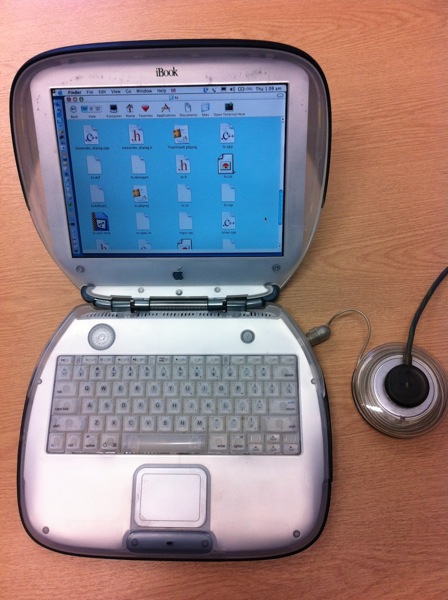
In light of today's news here's my favourite Mac, the original iBook.
Ibookclam
In many ways, it wasn't the machine itself so grabbed me (cool as it was), it was the experience of unpacking it when it arrived in my office over a decade ago. In the box with the computer and the mains cord was a disc about the size of a hockey puck (on the right in the image above). I looked at it and wondered what on Earth it was. It looked like a giant yo-yo, with cable wrapped around instead of string. Then the penny dropped — it was the power supply. You plugged the mains cord into the yo-yo, then unwound just as much cord as you needed (oh, and when you connected it in to your iBook the plug glowed orange if the battery needed charging, green if it was fully charged). The child inside me squealed with delight (being a grown up I laughed out loud, rather than actually squealing).

The iBook still works (the battery is long dead, but plug the yo-yo into the mains and it still works), and it manages to run an early version of Mac OS X.

If anybody has to ask why people love Apple products, it's not because of the "brand", or the "exclusivity", it's because of the joy they can invoke. Someone cared enough to make the most mundane task — plugging a laptop into the mains — into a thing of beauty.

Wednesday, October 05, 2011

Taxonomy - crisis, what crisis?

Following on from the last post How many species are there, and why do we get two very different answers from same data? another interesting paper has appeared in TREE:

Lucas N. Joppa, David L. Roberts, Stuart L. Pimm The population ecology and social behaviour of taxonomists Trends in Ecology & Evolution doi:10.1016/j.tree.2011.07.010

The paper analyses the "ecology and social habits of taxonomists" and concludes:

Conventional wisdom is highly prejudiced. It suggests that taxonomists were a formerly more numerous people, are in 'crisis', are becoming endangered and are generally asocial. We consider these hypotheses and reject them to varying degrees.

Queue flame war on TAXACOM, no doubt, but it's a refreshing conclusion, and it's based on actual data. Here I declare an interest. I was a reviewer, and in a fit of pique recommended rejection simply because the authors don't make the data available (they do, however, provide the R scripts used to do the analyses). As the authors patiently pointed out in their response to reviews, the various explicit or implicit licensing statements attached to taxonomic data mean they can't provide the data (and I'm assuming that in at least some cases the dark art of screen scrapping was used to get the data).

There's an irony here. Taxonomic databases are becoming hot topics, generating estimates of the scale of the task facing taxonomy, and diagnosing state of the discipline itself (according to Joppa et al. it's in rude health). This is the sort of thing that can have a major impact on how people perceive the discipline (and may influence how many resources are allocated to the subject). If taxonomists take issue with the analyses then they will find them difficult to repeat because the taxonomic data they've spent their careers gathering are under lock and key.

Tuesday, October 04, 2011

How many species are there, and why do we get two very different answers from same data?

GlobeTwo papers estimating the total number of species have recently been published, one in the open access journal PLoS Biology:

Camilo Mora, Derek P. Tittensor, Sina Adl, Alastair G. B. Simpson, Boris Worm. How Many Species Are There on Earth and in the Ocean?. PLoS Biol 9(8): e1001127. doi:10.1371/journal.pbio.1001127

SSB logo final
the second in Systematic Biology (which has an open access option but the authors didn't use it for this article):

Mark J. Costello, Simon Wilson and Brett Houlding. Predicting total global species richness using rates of species description and estimates of taxonomic effort. Syst Biol (2011) doi:10.1093/sysbio/syr080

The first paper has gained a lot of attention, in part because Jonathan Eisen Bacteria & archaea don't get no respect from interesting but flawed #PLoSBio paper on # of species on the planet was mightily pissed off about the estimates of the number:
Their estimates of ~ 10,000 or so bacteria and archaea on the planet are so completely out of touch in my opinion that this calls into question the validity of their method for bacteria and archaea at all.

The fuss over the number of bacteria and archaea seems to me to be largely a misunderstanding of how taxonomic databases count taxa. Databases like Catalogue of Life record described species, and most bacteria aren't formally described because they can't be cultured. Hence there will always be a disparity between the extent of diversity revealed by phylogenetics and by classical taxonomy.

The PLoS Biology paper has garnered a lot more reaction than the Systematic Biology paper (e.g., the commentary by Carl Zimmer in the New York TimesHow Many Species? A Study Says 8.7 Million, but It’s Tricky), which arguably has the more dramatic conclusion.

How many species, 8.7 million, or 1.8 to 2.0 million?

Whereas the Mora et al. in PLoS Biology concluded that there are some 8.7 million (±1.3 million SE) species on the planet, Costello et al. in Systematic Biology arrive at a much more conservative figure (1.8 to 2.0 million). The implications of these two studies are very different, one implies there's a lot of work to do, the other leads to headlines such as 'Every species on Earth could be discovered within 50 years'.

What is intriguing is that both studies use the same databases, Catalogue of Life and the World's Register of Marine Species, and yet arrive at very different results.

So, the question is, how did we arrive at two very different answers from the same data?


Friday, September 30, 2011

Taylor and Francis Online breaks DOIs - lots of DOIs

TandFOnline twitterDOIs are meant to be the gold standard in bibliographic identifier for article. They are not supposed to break. Yet some publishers seem to struggle to get them to work. In the past I've grumbled about BioOne, Wiley, and others as cuplrits with broken or duplicate or disappearing DOIs.

Today's source of frustration is Taylor and Francis Online. T&F Online is powered by (Atypon), which recently issued this glowing press release:

SANTA CLARA, Calif.—20 September 2011—Atypon®, a leading provider of software to the professional and scholarly publishing industry, today announced that its Literatum™ software is powering the new Taylor & Francis Online platform (www.TandFOnline.com). Taylor & Francis Online hosts 1.7 million articles.
...
"The performance of Taylor & Francis Online has been excellent," said Matthew Jay, Chief Technology Officer for the Taylor & Francis Group. "Atypon has proven that it can deliver on schedule and achieve tremendous scale. We're thrilled to expand the scope of our relationship to include new products and developments."

Great, except that lots of T&F DOIs are broken. I've come across two kinds of fail.

DOI resolves to server that doesn't exist
The first is where a DOI resolves to a phantom web address. For example, the DOI doi:10.1080/00288300809509849 resolves to http://tandfprod.literatumonline.com/doi/abs/10.1080/00288300809509849. But the domain tandfprod.literatumonline.com doesn't exist, so the DOI is a dead end.

DOI doesn't resolve
Taylor and Francis have digitised the complete Annals and Magazine of Natural History, a massive journal comprising nearly 20,000 articles from 1841 to 1966, and which has published some seminal papers, including A. R. Wallace's "On the law which has regulated the introduction of new species" doi"10.1080/037454809495509 which forced Darwin's hand (see the Wikipedia page for the successor journal Journal of Natural History. Taylor and Francis are to be congratulated for putting such a great resource online.

Problem is, I've not found a single DOI for any article in Annals and Magazine of Natural History that actually works. If you try and resolve the DOI for Wallace's paper, doi"10.1080/037454809495509, you get the dreaded "Error - DOI not found" web page. So something like 20,000 DOIs simply don't work. The only way to make the DOI work is append it to "http://www.tandfonline.com/doi/abs/", e.g. http://www.tandfonline.com/doi/abs/10.1080/037454809495509. This gets us to the article, but rather defeats the purpose of DOIs.

Why?
Something is seriously wrong with CrossRef's quality control. It can't be too hard to screen all domains to see if they actually exist (this would catch the first error). It can't be too hard to take a random sample of DOIs and check that they work, or automatically check DOIs that are reported as missing. In the case the Annals and Magazine of Natural History the web page for the Wallace article states that it has been available online since 16 December 2009. That's a long time for a DOI to be dead.

There is a wealth of great content that is being made hard to find by some pretty basic screw ups. So CrossRef, Atypon and Taylor and Francis, can we please sort this out?


Wednesday, September 21, 2011

Linked data that isn't: the failings of RDF

OK, a bit of hyperbole in the morning. One of the goals of RDF is to create the Semantic Web, an interwoven network of data seamlessly linked by shared identifiers and shared vocabularies. Everyone uses the same identifiers for the same things, and when they describe these things they use the same terms. Simples.

Of course, the reality is somewhat different. Typically people don't reuse identifiers, and there are usually several competing vocabularies we can chose from. To give a concrete example, consider two RDF documents describing the same article, one provided by CiNii, the other by CrossRef. The article is:

Astuti, D., Azuma, N., Suzuki, H., & Higashi, S. (2006). Phylogenetic Relationships Within Parrots (Psittacidae) Inferred from Mitochondrial Cytochrome-b Gene Sequences(Phylogeny). Zoological science, 23(2), 191-198. doi:10.2108/zsj.23.191

You can get RDF for a CiNii record by appending ".rdf" to the URL for the article, in this case http://ci.nii.ac.jp/naid/130000017049. For CrossRef you need a Linked Data compliant client, or you can do something like this:


curl -D - -L -H "Accept: application/rdf+xml" "http://dx.doi.org/10.2108/zsj.23.191"

You can view the RDF from these two sources here and here.

No shared identifiers
The two RDF documents have no shared identifiers, or at least, any identifiers they do share aren't described in a way that is easily discovered. The CrossRef record knows nothing about the CiNii record, but the CiNii document includes this statement:


<rdfs:seeAlso rdf:resource="http://ci.nii.ac.jp/lognavi?name=crossref
&amp;id=info:doi/10.2108/zsj.23.191" dc:title="CrossRef" />

So, CiNii knows about the DOI, but this doesn't help much as the CrossRef document has the URI "http://dx.doi.org/10.2108/zsj.23.191", so we don't have an explicit statement that the two documents refer to the same article.

The other shared identifier the documents could share is the ISSN for the journal (0289-0003), but CiNii writes this without the "-", and uses the PRISM term "prism:issn", so we have:


<prism:issn>02890003</prism:issn>


whereas CrossRef writes the ISSN like this:


<ns0:issn xmlns:ns0="http://prismstandard.org/namespaces/basic/2.1/">
0289-0003</ns0:issn>


Unless we have a linked data client that normalises ISSNs before it does a SPARQL query we will miss the fact that these two articles are in the same journal.

Inconsistent vocabularies
Both CiNii use the PRISM vocabulary to describe the article, but they use different versions. CrossRef uses "http://prismstandard.org/namespaces/basic/2.1/" whereas CiNii uses "http://prismstandard.org/namespaces/basic/2.0/". Version 2.1 versus version 2.0 is a minor difference, but the URIs are different and hence they are different vocabularies (having version numbers in vocabulary URIs is asking for trouble). Hence, even if CiNii and CrossRef wrote ISSNs in the same way, we'd still not be able to assert that the articles come from the same journal.
Inconsistent use of vocabularies
Both CiNii use FOAF for author names, but they write the names differently:


<foaf:name xml:lang="en">Suzuki Hitoshi</foaf:name>


<ns0:name xmlns:ns0="http://xmlns.com/foaf/0.1/">Hitoshi Suzuki</ns0:name>


So, another missed opportunity to link the documents. One could argue this would be solved if we had consistent identifiers for authors, but we don't. In this case CiNii have their own local identifiers (e.g. http://ci.nii.ac.jp/nrid/1000040179239), and CrossRef has a rather hideous looking Skolemisation: http://id.crossref.org/contributor/hitoshi-suzuki-2gypi8bnqk7yy.

In summary, it's a mess. Both CiNii and CrossRef organisations are whose core business is bibliographic metadata. It's great that both are serving RDF, but if we think this is anything more than providing metadata in a useful format I think we may be deceiving ourselves.

Tuesday, September 20, 2011

Orwellian metadata: making journals disappear

UnknownI've been spending a lot of time recently mapping bibliographic citations for taxonomic names to digital identifiers (such as DOIs). This is tedious work at the best of times (despite lots of automation), but it is not helped but the somewhat Orwellian practices of some publishers. Occasionally when an established journal gets renamed the publisher retrospectively applies that name to the previous journal. For example, in 2000 the journal Entomologica Scandinavica (ISSN 0013-8711) became Insect Systematics & Evolution (ISSN 1399-560X):


(diagram based on WorldCat xISSN history tool, rendered using Google Charts.)

Content for both Entomologica Scandinavica and Insect Systematics & Evolution is available from Ingenta's web site, but every article is listed as being in Insect Systematics & Evolution, and this is reflected in the metadata CrossRef has for each DOI.

For example, the paper
Andersen, N.M. & P.-p. Chen, 1993. A taxonomic revision of pondskater genus Gerris Fabricius in China, with two new species (Hemiptera: Gerridae). – Entomologica Scandinavica 24: 147-166

has the DOI doi:10.1163/187631293X00262 which resolves to a page saying this article was published in Insect Systematics & Evolution. The XML for the DOI says the same thing:


<issn type="print">1399560X</issn>
<issn type="electronic">1876312X</issn>
<journal_title>Insect Systematics & Evolution</journal_title>


In one sense this is no big deal. If you know the DOI then that's all you need to use to refer to the article (and the sooner we abandon fussing with citation styles and just use DOIs the better).

But if you haven't yet found the DOI then this is problem, because if I search CrossRef using the original journal name (Entomologica Scandinavica) I get nothing. As far as CrossRef is concerned the DOI doesn't exist. If, however, I happen to know that Entomologica Scandinavica is now Insect Systematics & Evolution, I rewrite the query and I retrieve the DOI.

It's bad enough dealing with taxonomic names changes without having to deal with journal names changes as well! It would be great if publishers didn't indulge in wholesale renaming old journals, or if CrossRef had a mechanism (perhaps based on WorldCat's xISSN History Visualization Tool) to handle retrospectively renamed journals.

Thursday, September 15, 2011

Anchoring Biodiversity Information: from Sherborn to the 21st century and beyond

Next month I'll be speaking in London at The Natural History Museum at a one day event Anchoring Biodiversity Information: From Sherborn to the 21st century and beyond. This meeting is being organised by the International Commission on Zoological Nomenclature and the Society for the History of Natural History, and is partly a celebration of his major work Index Animalium and partly a chance to look at the future of zoological nomenclature.

Details are available from the ICZN web site. I'll be giving a a talk entitled "Towards an open taxonomy" (no, I don't know what I mean by that either). But it should be a chance to rant about the failure of taxonomy to embrace the Interwebs.

SherbornPoster Sept 11

Wednesday, September 14, 2011

I think I now "get" the Encylopedia of Life

The Encylopedia of Life (EOL) has been relaunched, with a new look and much social media funkiness. I've been something of an EOL sceptic, but looking at the new site I think I can see what EOL is for. Ironically, it's not really about E. O. Wilson's original vision (doi:10.1016/S0169-5347(02)00040-X:
Imagine an electronic page for each species of organism on Earth, available everywhere by single access on command. The page contains the scientific name of the species, a pictorial or genomic presentation of the primary type specimen on which its name is based, and a summary of its diagnostic traits. The page opens out directly or by linking to other data bases, such as ARKive, Ecoport, GenBank and MORPHOBANK. It comprises a summary of everything known about the species’ genome, proteome, geographical distribution, phylogenetic position, habitat, ecological relationships and, not least, its practical importance for humanity.
We still lack a decent database that does this. EOL tries, but in my opinion still falls short, partly because it isn't nearly aggressive enough in harvesting and linking data (links to the primary literature anyone?), and has absolutely no notion of phylogenetics.

In terms of doing science I don't see much that I'd want to do with EOL, as opposed, say, to Wikipedia or existing taxonomic databases. But thinking about other applications, EOL has a lot of potential. One nice feature is the ability to make "collections". For example, Cyndy Parr has created a collection called Fascinating textures, which is simply a collection of images in EOL (I've included some below):

Textures
What is nice about this is that it cuts across any existing classification and assembles a set of taxa that share nothing other than having "fascinating textures". This ability to tag taxa means we could create all sorts of interest sets of taxa based on criteria that are meaningful in a particular context. For example, egotist that I am, I created a collection called Taxa described by Roderic Page, which includes the one crab and 6 bopyrid isopods that I described in the 80's.

Putting on my teaching hat, I'm involved in teaching a course on animal diversity and could imagine assembling collections of taxa relevant to a particular lecture (either taxonomically, or based on some other criteria, such as all parasites of a particular taxon, or all organisms found associated with deep sea vents. Other collections could be built by people or organisations with content. For example, lists of top ten new species, lists of species for which the BBC has content, etc.

In this sense, EOL becomes a tagging service for life, a bit like delicious. The social network side of things is still a little clunky —there doesn't seem to be a notion of "contacts" or "friends", and it needs integration with existing social networks — but I think I now "get" what EOL is for.

Tuesday, September 13, 2011

Phantom articles: why Mendeley needs to make duplication transparent

Browsing Mendeley I found the following record: http://www.mendeley.com/research/description-larva/. This URL is for a paper
Costa, J. M., & Santos, T. C. (2008). Description of the larva of. Zootaxa, 99(2), 129-131
which apparently has the DOI doi:10.1645/GE-2580.1. This is strange because Zootaxa doesn't have DOIs. The DOI given resolves to a paper in the Journal of Parasitology:
Harriman, V. B., Galloway, T. D., Alisauskas, R. T., & Wobeser, G. A. (2011). Description of the larva of Ceratophyllus vagabundus vagabundus (Siphonaptera: Ceratophyllidae) from nests of Rossʼs and lesser snow geese in Nunavut, Canada. The Journal of parasitology, 93(2), 197-200
Now, this paper has it's own record in Mendeley.

OK, so this is weird..., but it gets weirder. If you look at the Mendeley page for this chimeric article there is a PDF preview of yet another article:
LOPES, Maria José Nascimento; FROEHLICH, Claudio Gilberto and DOMINGUEZ, Eduardo (2003). Description of the larva of Thraulodes schlingeri (Ephemeroptera, Leptophlebiidae). Iheringia, Sér. Zool. 92(2), 197-200 2003 doi:10.1590/S0073-47212003000200011
Mendeley duplicate

But it gets even more interesting. The abstract for the phantom Zootaxa article belongs to yet another paper:
Marques, K. I. D. S., & Xerez, R. D.Description of the larva of Popanomyia kerteszi James & Woodley (Diptera: Stratiomyidae) and identification key to immature stages of Pachygastrinae. Neotropical Entomology, 38(5), 643-648.
which also exists in Mendeley.

To investigate further I used Mendeley's API to retrieve this record (I had to look at the source of the web page to find the internal identifier used by Mendeley, namely 010c48d0-edb5-11df-99a6-0024e8453de6 to do this, why does Mendeley hide these?). Here's the abbreviated JSON for this record.

{
...
"website": "http:\/\/www.ncbi.nlm.nih.gov\/pubmed\/21506868",
"identifiers": {
"pmid": "21506868",
"issn": "19372345",
"doi": "10.1645\/GE-2580.1"
},
...
"issue": "2",
"pages": "129-131",
"public_file_hash": "fe7eed3f6c43a3be1480a0937229b9ad33666df4",
"publication_outlet": "Zootaxa",
"type": "Journal Article",
"mendeley_url": "http:\/\/www.mendeley.com\/research\/description-larva\/",
"uuid": "010c48d0-edb5-11df-99a6-0024e8453de6",
"authors": [
{
"forename": "J M",
"surname": "Costa"
},
{
"forename": "T C",
"surname": "Santos"
}
],
"title": "Description of the larva of",
"volume": "99",
"year": 2008,
"categories": [
39,
203,
37,
52,
43,
40,
210
],
"oa_journal": false
}

Doesn't add much to the story, but does give us the sha1 for the PDF for the chimeric article (fe7eed3f6c43a3be1480a0937229b9ad33666df4). If I download the PDF for the article in Iheringia, Sér. Zool. it has the same sha1:


openssl sha1 a11v93n2.pdf
SHA1(a11v93n2.pdf)= fe7eed3f6c43a3be1480a0937229b9ad33666df4

This article doesn't exist
So, to summarise, this paper doesn't exist. It is credited to a journal that doesn't have DOIs, the DOI resolves to an article in a different journal, the abstract comes from another article in another journal, and the PDF is from a third article. OMG!

This is just weird
So, something about the way Mendeley merges references is broken. Merging references is a tough problem so there will always be cases where things go wrong. But it would be really, really helpful if Mendeley could display the set of articles that it has merged to create each canonical reference (say by listing the UUIDs for each article). Users could then see if badness had happened, and provide feedback, for example by highlighting references that are clearly the same, and those that are clearly different. Until this happens I'm a bit nervous about trusting Mendeley with my bibliographic data, I don't want it mangled into chimeric papers that don't exist.

Rethinking citation matching

Some quick half-baked thoughts on citation matching. One of the things I'd really like to add to BioStor is the ability to parse article text and extract the list of literature cited. Not only would this be another source of bibliographic data I can use to find more articles in BHL, but I could also build citation networks for articles in BioStor.

Citation matching is a tough problem (see the papers below for a starting point).

Citation::Multi::Parser is a group in Computer and Information Science on Mendeley.


To date my approach has been to write various regular expressions to extract citations (mainly from web pages and databases). The goal, in a sense, is to discover the rules used to write the citation, then extract the component parts (authors, date, title, journal, volume, pagination, etc.). It's error prone — the citation might not exactly follow the rules, there might be errors (e.g., OCR, etc.). There are more formal ways of doing this (e.g., using statistical methods to discover which set of rules is most likely to have generated the citation, but these can get complicated.

It occurs to me another way of doing this would be the following:
  1. Assume, for arguments sake, we have a database of most of the references we are likely to encounter.
  2. Using the most common citation styles, generate a set of possible citations for each reference.
  3. Use approximate string matching to find the closest citation string to the one you have. If the match is above a certain threshold, accept the match.

The idea is essentially to generate the universe of possible citation strings, and find the one that's closest to the string you are trying to match. Of course, tis universe could be huge, but if you restrict it to a particular field (e.g., taxonomic literature) it might be manageable. This could be a useful way of handling "microcitations". Instead of developing regular expressions of other tools to discover the underlying model, generate a bunch of microcitations that you expect for a given reference, and string match against those.

Might not be elegant, but I suspect it would be fast.

More BHL app ideas

Hero rosellasFollowing on from my previous post on BHL apps and a Twitter discussion in which I appealed for a "sexier" interface for BHL (to which @elywreplied that is what BHL Australia were trying to do), here are some further thoughts on improving BHL's web interface.
Build a new interface
A fun project would be to create a BHL website clone using just the BHL API. This would give you the freedom to explore interface ideas without having to persuade BHL to change its site. In a sense, the app would be provide the persuasion.

Third party annotations
It would be nice if the BHL web site made use of third party annotations. For example, BHL itself is extracting some of the best images and putting them on Flickr. How about if you go to the page for an item in BHL and you see a summary of the images from that item in Flickr? At a glance you can see whether the item has some interesting content. For example, if you go to http://biodiversitylibrary.org/item/109846 you see this:

N2 w1150

which gives you no idea that it contains images like this:

n24_w1150Tables of contents
Another source of annotations is my own BioStor project, which finds articles in scanned volumes in BHL. If you are looking at an item in BHL it would be nice to see a list of articles that have been found in that item, perhaps displayed in a drop down menu as a table of contents. This would help provide a way to navigate through the volume.

Who links to BHL?
When I suggested third party annotations on Twitter @stho002chimed in asking about Wikispecies, Species-ID, ZooBank, etc. These resources are different, in that they aren't repurposing BHL content but are linking to it. It woud be great if a BHL page for an item could display reverse links (i.e., the pages in those external databases that link to that BHL item).

Implementing reverse links (essential citation linking) can be tricky, but two ways to do it might be:
  1. Use BHL web server logs to find and extract referrals from those projects
  2. Perhaps more elegantly, encourage external databases to link to BHL content using an OpenURL which includes the URL of the originating page. OpenURL can be messy, but especially in Mediawiki-based projects such as Wikispecies and Species-ID it would be straightforward to make a template that generated the correct syntax. In this way BHL could harvest the inbound links and display them on the item page.


Monday, September 12, 2011

Duplicate DOIs for the same article: alias DOIs, who knew?

As part of a project to map taxonomic citations to bibliographic identifiers I'm tackling strings like this (from the ION record urn:lsid:organismnames.com:name:1405511 for Pseudomyrmex crudelis):

<tdwg_co:PublishedIn>
Systematics, biogeography and host plant associations of the Pseudomyrmex viduus group (Hymenoptera: Formicidae), Triplaris- and Tachigali-inhabiting ants. Zoological Journal of the Linnean Society, 126(4), August 1999: 451-540. 516 [Zoological Record Volume 136]
</tdwg_co:PublishedIn>

I parse the string into its components (e.g., journal, volume, issue, pagination) and use scripts to locate identifiers such as DOIs. I regard DOIs as the gold standard for bibliographic identifiers. The are (usually) unique, and CrossRef provides some really useful services to support them (DOIs now also support linked data if you are in to that sort of thing). Occasionally there are problems, such as duplicate DOIs when material moves from a publisher's site to, say, JSTOR. And some publishers are really, really bad at releasing DOIs that don't resolve. For example, Taylor & Francis Online have at least 18,000 DOIs for the Annals and Magazine of Natural History that don't resolve (e.g., doi:10.1080/00222933809512318 for this paper).

Sometimes my automated scripts for finding DOIs fail and I have to resort to Googling. To my surprise, I found two versions of the paper "Systematics, biogeography and host plant associations of the Pseudomyrmex viduus group (Hymenoptera: Formicidae), Triplaris- and Tachigali-inhabiting ants", each with a different DOI:


Now, this isn't supposed to happen. Interestingly, if you resolve doi:10.1006/zjls.1998.0158, either on the web or using CrossRef's OpenURL resolver, you get the page/metadata for doi:10.1111/j.1096-3642.1999.tb00157.x.

To see what was going on I fired up my local installation of Tony Hammnd's OpenHandle tool (see http://bioguid.info/openhandle/) and entered the Elsevier DOI (10.1006/zjls.1998.0158) and got this:


{
"comment" : "OpenHandle (JSON) - see http://code.google.com/p/openhandle/" ,
"handle" : "hdl:10.1006/zjls.1998.0158" ,
"handleStatus" : {
"code" : "1" ,
"message" : "SUCCESS"
} ,
"handleValues" : [
{
"index" : "100" ,
"type" : "HS_ADMIN" ,
"data" : {
"adminRef" : "hdl:10.1006/zjls.1998.0158?index=100" ,
"adminPermission" : "111111110111"
} ,
"permission" : "1110" ,
"ttl" : "+86400" ,
"timestamp" : "Thu Apr 13 19:09:03 BST 2000" ,
"reference" : []
} ,
{
"index" : "1" ,
"type" : "URL" ,
"data" : "http://linkinghub.elsevier.com/retrieve/pii/S0024408298901583" ,
"permission" : "1110" ,
"ttl" : "+86400" ,
"timestamp" : "Tue Aug 12 16:43:12 BST 2003" ,
"reference" : []
} ,
{
"index" : "700050" ,
"type" : "700050" ,
"data" : "20030811104844000" ,
"permission" : "1110" ,
"ttl" : "+86400" ,
"timestamp" : "Tue Aug 12 16:43:16 BST 2003" ,
"reference" : []
} ,
{
"index" : "1970" ,
"type" : "HS_ALIAS" ,
"data" : "10.1111/j.1096-3642.1999.tb00157.x" ,
"permission" : "1110" ,
"ttl" : "+86400" ,
"timestamp" : "Mon Aug 25 21:06:50 BST 2008" ,
"reference" : []
}
]
}

The interesting bit is the "HS_ALIAS" at the bottom. I'd not come across this before, although it's in the spec (RFC 3651) for all to see (yeah, but who reads those?). The handle system that underlies DOIs has mechanism to support aliases, so that a DOI that originally pointed to a web page (say, for an article) can be redirected to point to another DOI. In this case, the Elsevier DOI redirects to the Wiley DOI ("10.1111/j.1096-3642.1999.tb00157.x" in the HS_ALIAS section), so the user ends up at Wiley's page for this article, not Elsevier's. This provides a way to accommodate changes in article ownership, without requiring an existing publisher to reuse the previous publisher's DOI.

In one sense this seems to defeat the point of DOIs, namely that they are effectively opaque identifiers that any publisher should be able to host. Perhaps in this case the issue is that the DOI prefix ("10.1006" and "10.1111" for Elsevier and Wiley, respectively) corresponds to a publisher, and when something goes wrong with a DOI it's easier to identify who is responsible based on this prefix, rather than the individual DOI.

In any event, next time I come across a duplicate DOI I'll need to check whether it is an alias of another DOI before launching into another rant about the (occasional) failings of DOIs.

Wednesday, September 07, 2011

Suggested apps for BHL's Life and Literature Code Challenge


Since I won't be able to be at the Biodiversity Heritage Library's Life and Literature meeting I thought I'd share some ideas for their Life and Literature Code Challenge. The deadline is pretty close (October 17) so having ideas now isn't terribly helpful I admit. That aside, here are some thoughts inspired by the challenge. In part this post has been inspired by the Results of the PLoS and Mendeley "Call for Apps", where PLoS and Mendeley asked for people (not necessarily developers) to suggest the kind of apps they'd like to see. As an aside, one thing conspicuous by it's absence is a prize for winning the challenge. PLoS and Mendeley have a "API Binary Battle" with a prize of $US 10,001, which seems more likely to inspire people to take part.

Visual search engine
I suspect that many BHL users are looking for illustrations (exemplified by the images being gathered in BHL's Flickr group). One way to search for images would be to search within the OCR text for figure and plate captions, such as "Fig. 1". Indexing these captions by taxonomic name would provide a simple image search tool. For modern publications most figures are on the same page as the caption, but for older publications with illustrations as plates, the caption and corresponding image may be separated (e.g., on facing pages), so the search results might need to show pages around the page containing the caption. As an aside, it's a pity the Flickr images only link to the BHL item and not the BHL page. If they did the later, and the images were tagged with what they depict, you could great a visual search engine using the Flickr API (of course, this might be just the way to implement the visual search engine — harvest images, tags with PageID and taxon names, upload to Flickr).

Mobile interface
The BHL web site doesn't look great on an iPhone. It makes no concessions to the mobile device, and there are some weird things such as the way the list of pages is rendered. A number of mainstream science publishers are exploring mobile versions of their web sites, for example Taylor and Francis have a jQuery Mobile powered interface for mobile users. I've explored iPad interfaces to scientific articles in previous posts. BHL content posses some challenges, but is fundamentally the same as viewing PDFs — you have fixed pages that you may want to zoom.

OCR correction
There is a lot of scope for cleaning up the OCR text in BHL. Part of the trick would be to have a simple use interface for people to contribute to this task. In an earlier post I discussed a Firefox hOCR add-on that provides a nice way to do this. Take this as a starting point, add a way to save the cleaned up text, and you'd be well on the way to making a useful tool.

Taxon name timeline
Despite the shiny new interface, the Encyclopedia of Life still displays BHL literature in the same clunky way I described in an earlier blog post. It would great to have a timeline of the usage of a name, especially if you could compare the usage of different names (such as synonyms). In many ways this is the BHL equivalent Google Books Ngram viewer.

These are just a few hastily put together thoughts. If you have any other ideas or suggestions, feel free to add them as comments below.

- Posted using BlogPress from my iPad

Sunday, August 28, 2011

Tree of Life 0.1 - annotating the NCBI taxonomy

Last week I was at the NSF "Assembling, Visualising and Analysing the Tree of Life" Ideas Lab, run by KnowInnovation.com/. It was an interesting experience, essentially a structured week of brainstorming ideas.

One thing I came away with is the feeling that our notions of the "tree of life" are fuzzy, contradictory, and often probably unobtainable. It's tempting to imagine all sorts of wonderful visualisations, and loose sight of building something that is useful. Perhaps it's time instead to think of "Tree of Life version 0.1".

Imagine taking the NCBI taxonomy as a starting point. Yes it's incomplete, and has almost no fossils, but it's freely available and linked to a lot of data. Let's use a Google Maps-like viewer along the lines I explored earlier this year.

Then add annotation "tracks" to the tips. As a first pass these could be taken from the NCBI LinkOut service, such as the NCBI-Wikipedia mapping http://iphylo.org/linkout.

Ncbi 1

The NCBI tree is a classification rather than a phylogeny, so we could add greater phylogenetic content by linking to phylogenetic databases, such as TreeBASE and PhyLoTA. Imagine clicking on a node in the NCBI taxonomy and seeing a display of all the phylogenies centred on that node:

Ncbi 02

Now we have a way to navigate a large tree, view annotations, and display phylogenetic trees. All of this could be done fairly easily. The key is to have services keyed by the NCBI tax_id used to identify nodes on the tree.

Among the next steps would be to add additional "tracks", perhaps based on curated links analogous to the wiki-based NCBI-Wikipedia mapping. For example, very basic habitat data (marine or terrestrial) could be added, or geography, or host relationships (could be based in part on the data already in GenBank).

Given that the NCBI tree continues to grow, subsequent versions could be released as the tree changes. Or we could "fork" the NCBI tree and start to refine it based on phylogenetic information, and add taxa that aren't in the genome databases (these taxa will need consistent identifiers so we can map annotations on to them as well). Perhaps we could use something like Git to manage this tree, and to handle the necessary merging of updated versions of the NCBI tree. People could edit the tree, or indeed fork it and come up with their own.

Logo tmp reasonably smallThere are lots of ways to visualise trees (see TreeVis.net for some great examples), but what I'm after is a tool that is useful, that gives us a sense of what we know and what we don't. I suspect that one of the reasons we've struggled with visualising the tree of life is that there are lots of different notions about what it's for. In this case, I want a tool to navigate data about organisms, one that we can easily add annotations too.